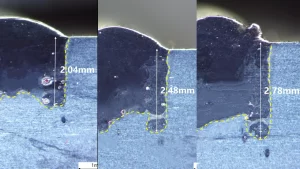
The Problem: Traditional Welding Is Holding Your Production Back
Traditional welding methods like TIG and MIG are increasingly limiting modern manufacturing efficiency due to slow speeds, high labor costs, and inconsistent quality.Despite decades of use, TIG and MIG welding come with critical drawbacks:
- Slow welding speeds (often 2–5x slower than laser)
- High heat input causing material distortion
- Heavy reliance on skilled labor
- Extensive post-processing (grinding, polishing)
According to industry data, manual welding can account for up to 30–50% of total production time, significantly impacting profitability.
As global manufacturing shifts toward automation and precision, these inefficiencies are no longer sustainable.
What Are Handheld Laser Welding Machines?
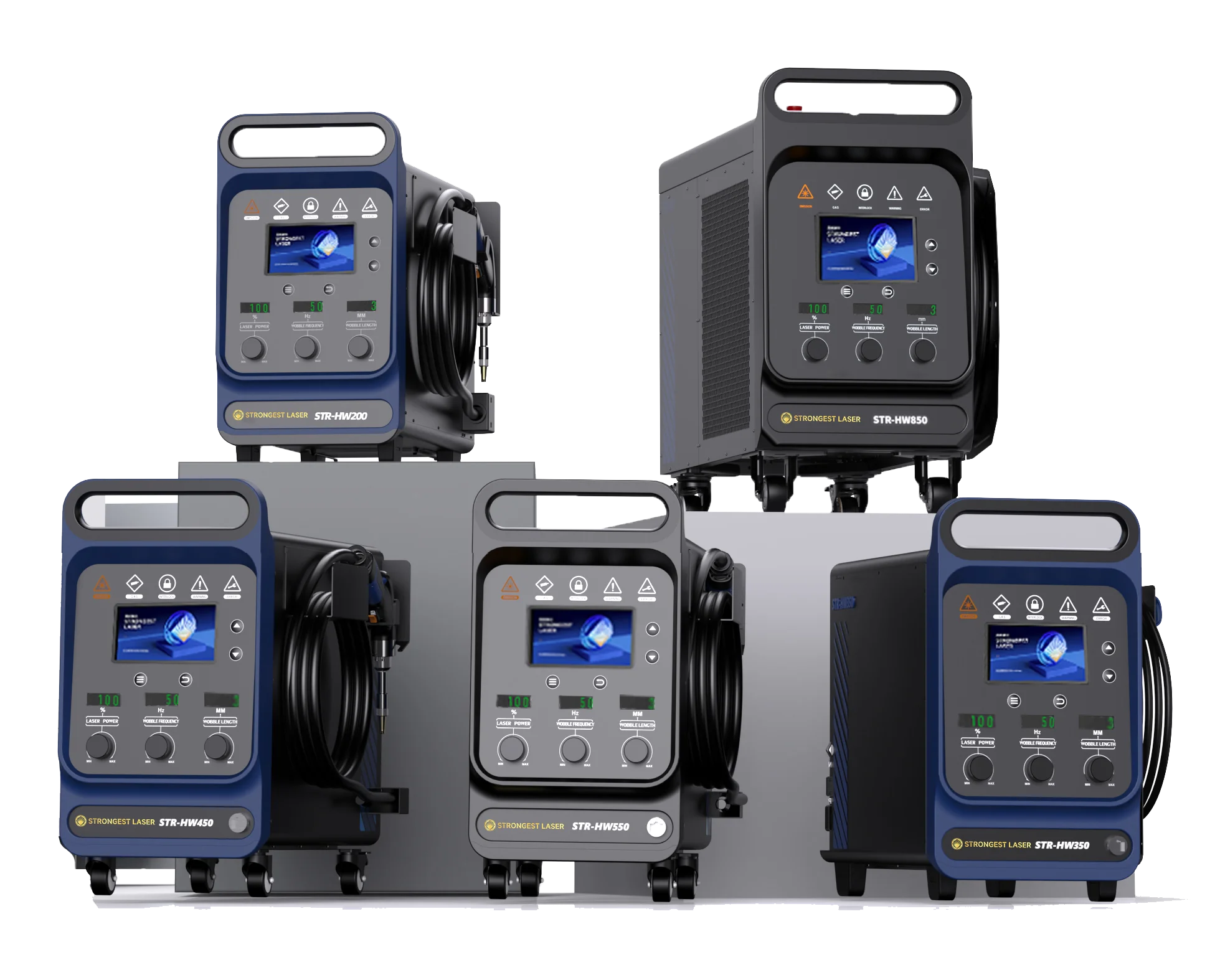
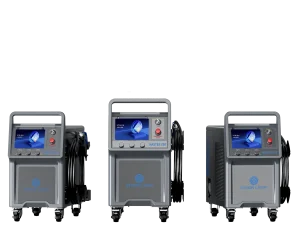
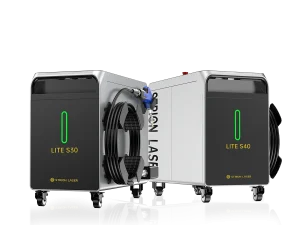
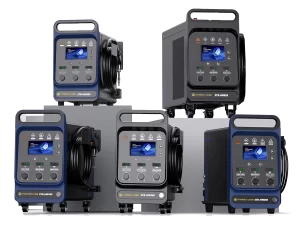
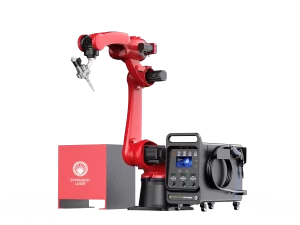
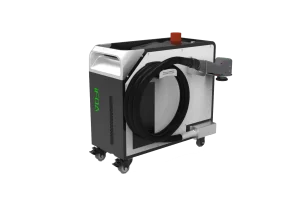
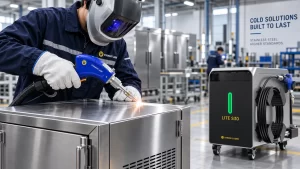
Handheld laser welding machines are advanced tools that use a concentrated laser beam to melt and fuse metals with high precision and minimal heat impact.Unlike traditional welding:
- The process is non-contact
- Heat is highly localized
- Results are clean and consistent
These machines typically use fiber laser technology, which offers:
- High energy efficiency (up to 30–40% conversion rate)
- Long lifespan (over 100,000 hours)
- Stable beam quality
Key Advantages of Handheld Laser Welding Machines
Handheld laser welding machines deliver superior speed, precision, and cost efficiency compared to traditional welding methods.
1. Ultra-Fast Welding Speed
Laser welding is 2–10x faster than TIG welding, dramatically increasing productivity.
2. High Precision & Clean Welds
- Minimal spatter
- Smooth seams
- Reduced rework
3. Low Heat Input
The heat-affected zone is reduced by up to 80%, preventing warping and deformation.
4. Easy Operation
Operators can be trained in just a few days, compared to months for TIG welding.
5. Lower Total Cost
Businesses report:
- Up to 70% labor cost reduction
- 50% less post-processing time
Applications Across Industries
Handheld laser welding machines are widely used across industries requiring precision, efficiency, and clean weld finishes.
Common Applications:
- Stainless steel fabrication
- Automotive components
- Kitchen equipment
- Sheet metal processing
- Doors & windows manufacturing
Industry Impact:
- Automotive: improved weld consistency
- Construction: faster installation cycles
- Manufacturing: reduced defect rates
Handheld Laser Welding vs Traditional Welding
Laser welding outperforms TIG and MIG welding in speed, precision, and operational efficiency.
| Feature | Handheld Laser Welding | TIG Welding | MIG Welding |
|---|---|---|---|
| Speed | ⭐⭐⭐⭐⭐ | ⭐⭐ | ⭐⭐⭐ |
| Precision | ⭐⭐⭐⭐⭐ | ⭐⭐⭐ | ⭐⭐⭐ |
| Heat Impact | Very Low | High | Medium |
| Post-processing | Minimal | High | Medium |
| Skill Requirement | Low | High | Medium |
| Operating Cost | Low | High | Medium |
Result: Laser welding delivers higher ROI and scalability for modern factories.
Why Manufacturers Are Switching in 2026
Manufacturers are adopting handheld laser welding machines to stay competitive in speed, cost efficiency, and automation readiness.Key drivers:
- Rising labor costs
- Demand for precision manufacturing
- Industry 4.0 integration
- Need for faster delivery cycles
FAQ: Handheld Laser Welding Machines
1. Is laser welding better than TIG welding?
Yes, laser welding is faster, more precise, and requires less post-processing.
2. How much does a handheld laser welding machine cost?
Prices typically range from $3,000 to $15,000, depending on power and features.
3. What materials can be welded?
Stainless steel, carbon steel, aluminum, and galvanized sheets.
4. Is it safe to use?
Yes, with proper protective equipment and training.
5. How long does it take to learn?
Most operators can learn basic operation within 1–3 days.
6. What power should I choose?
- 1000W: thin materials
- 1500W: general use
- 2000W: heavy-duty welding
Why Choose STRION Laser?
STRION Laser provides high-performance handheld laser welding machines designed for industrial efficiency and reliability. With STRION Laser, you get:
- Advanced fiber laser systems
- User-friendly design
- Stable, long-term performance
- Global technical support
Conclusion
Handheld laser welding machines are rapidly replacing TIG and MIG welding because they deliver unmatched speed, precision, and cost savings. In 2026 and beyond, businesses that adopt this technology will benefit from:
- Faster production cycles
- Lower operational costs
- Higher product quality