The Limitation of CO2 Lasers in Modern Manufacturing
CO2 lasers are becoming less efficient for modern industrial needs due to higher energy consumption, slower processing speeds, and limited metal performance.For decades, CO2 lasers were widely used across industries. However, they come with major limitations:
- Low efficiency (only 5–10% energy conversion)
- Higher electricity consumption
- Slower processing speeds
- Limited performance on reflective metals
As manufacturing shifts toward automation and precision, these drawbacks are becoming critical bottlenecks.
What Is the Difference Between CO2 and Fiber Lasers?
The key difference between CO2 and fiber lasers lies in their wavelength, energy efficiency, and material compatibility, which is why many manufacturers choose a trusted fiber laser welding machine supplier when upgrading production lines.
- CO2 laser wavelength: 10.6 μm
- Fiber laser wavelength: 1.06 μm
This difference directly impacts how materials absorb laser energy.
👉 Fiber lasers are better absorbed by metals, making them ideal for welding and cutting.
Performance Comparison: Fiber vs CO2 Laser
Fiber lasers outperform CO2 lasers in speed, precision, and efficiency, making them the preferred choice in modern manufacturing.
Key Performance Data:
- ⚡ 3–5x faster processing speed
- 🔋 Up to 90% energy efficiency
- ⏳ Up to 100,000 hours lifespan
- 💰 ≈50% lower operating cost
Applications: Why Fiber Laser Wins in Metal Processing
Fiber lasers are widely used in industries requiring high-precision metal processing, especially welding applications.
Fiber Laser Applications:
- Stainless steel welding
- Automotive parts
- Aerospace components
- Sheet metal fabrication
CO2 Laser Applications:
- Wood, plastics, textiles
- Packaging and engraving
👉 Conclusion:
➡️ Fiber = Metal
➡️ CO2 = Non-metal
Why Fiber Laser Welding Machines Are Replacing Traditional Systems
Fiber laser welding machines combine high efficiency, precision, and ease of use, making them superior to both CO2 lasers and traditional welding methods.
Key Advantages:
1. Faster Production
Fiber laser welding is significantly faster, reducing production cycles.
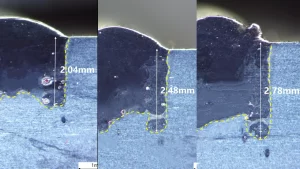
2. Better Weld Quality
- Minimal distortion
- Clean seams
- Low spatter
3. Lower Cost Over Time
Although initial investment is higher, fiber lasers deliver better ROI due to:
- Lower energy consumption
- Minimal maintenance
- Longer lifespan
4. Easy Operation
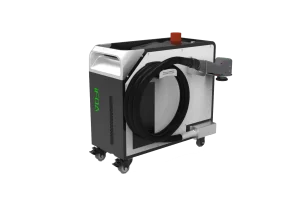
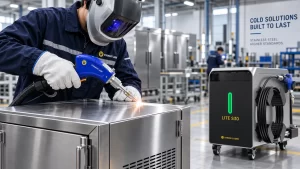
Modern handheld systems allow operators to learn quickly, reducing labor dependency.
CO2 vs Fiber Laser: Full Comparison Table
| Feature | CO2 Laser | Fiber Laser |
|---|---|---|
| Wavelength | 10.6 μm | 1.06 μm |
| Efficiency | 5–10% | >90% |
| Speed | Slow | 3–5x faster |
| Maintenance | High | Low |
| Lifespan | Shorter | Up to 10x longer |
| Best For | Non-metals | Metals |
Why Choose STRION Laser?
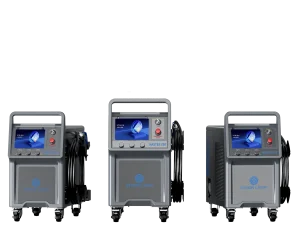
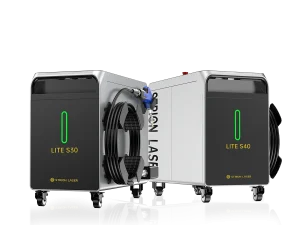
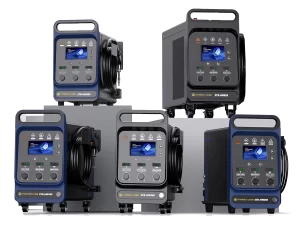
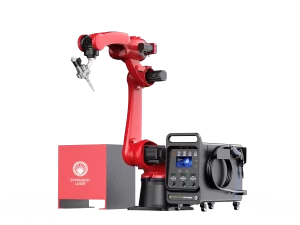
STR Laser provides advanced fiber laser welding machines designed for high efficiency, precision, and industrial durability.With STR Laser, you get:
- Reliable fiber laser technology
- User-friendly handheld design
- Stable performance for industrial applications
- Global support
Final Thoughts
The shift from CO2 to fiber laser technology is driven by efficiency, precision, and long-term cost savings.In 2026, manufacturers choosing fiber laser welding machines gain:
- Faster production
- Lower operational costs
- Higher product quality
👉 Fiber laser is no longer an option — it’s the new industry standard.