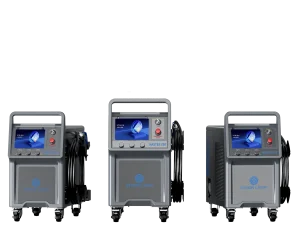
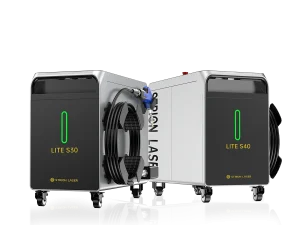
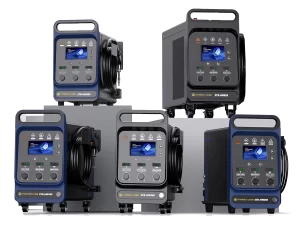
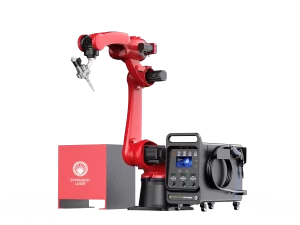
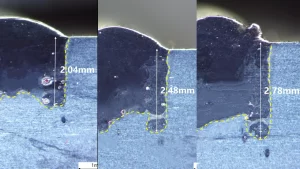
Shielding Gas Guide for Handheld Laser Welding Machines | Argon, Nitrogen, CO₂ & Compressed Air
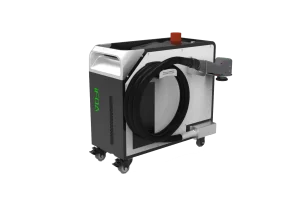
With the rapid popularization of portable handheld laser welders in metal fabrication, sheet metal processing, hardware manufacturing, and engineering machinery industries, more users encounter unstable weld quality, porosity, black weld seams, and oxidation defects. Most welding problems are not caused by equipment failure, but by incorrect shielding gas selection. As a professional handheld laser welding machine manufacturer, we systematically analyze the influence of argon, nitrogen, carbon dioxide, and compressed air on welding effects, targeting handheld laser welding machine for stainless steel, handheld laser welding machine for Aluminum, and handheld laser welding machine for Carbon Steel. This guide helps users maximize the performance of handheld laser welding machines and effectively reduce welding scrap rate.
Why Shielding Gas Matters for Handheld Laser Welding
Handheld laser welding technology relies on high‑energy laser beams to melt metal workpieces and form firm weld joints. The molten weld pool is extremely active at high temperatures and is easily oxidized by oxygen, moisture, and dust in the air. High‑quality shielding gas can isolate air, suppress laser plasma, reduce welding spatter, and ensure smooth, beautiful, and high‑strength welds. For fiber handheld laser welding equipment, different base metals require matched shielding gases; mismatched gas types will lead to poor weld forming, low tensile strength, and insufficient corrosion resistance, seriously affecting product yield.
1. Argon Gas: Universal Inert Shielding Gas for Precision Laser Welding
High‑purity argon is the most widely used inert shielding gas for handheld laser welding machines and is recognized as the universal gas for multi‑metal welding. It features stable chemical properties, no high‑temperature chemical reaction, and excellent isolation protection effect.
- For handheld laser welding machine for stainless steel: Argon provides perfect oxygen isolation for 201, 304, 316 stainless steel materials. It effectively avoids weld oxidation and blackening, produces silver‑bright flawless weld seams, and meets the high‑standard requirements of stainless steel decoration, sanitary ware, and pressure vessel welding. It is the preferred gas for high‑precision stainless steel laser welding.
- For handheld laser welding machine for Aluminum: Aluminum and aluminum alloy materials have high thermal conductivity and strong oxidation activity. Only high‑purity argon can prevent the formation of brittle aluminum nitride and aluminum oxide. It completely solves common aluminum welding problems such as weld porosity, crack, and unfused defects, ensuring tight and beautiful aluminum weld joints.
- For handheld laser welding machine for Carbon Steel: Argon can form smooth and flat weld beads with extremely low spatter, effectively improving the surface finish of carbon steel welds, suitable for high‑precision carbon steel sheet and profile welding.
Advantages: Stable protection, wide material compatibility, zero weld defects, high welding yield.
Disadvantages: Higher cost than nitrogen and carbon dioxide, suitable for high‑end and high‑precision welding scenarios.
2. Nitrogen Gas: Cost‑Effective Gas for Steel Laser Welding
Nitrogen is a cost‑effective alternative shielding gas for industrial handheld laser welding machines, favored by mass‑production processing factories due to its low price and stable protection performance for steel materials.
- For handheld laser welding machine for stainless steel: Nitrogen works perfectly for conventional 304 and 201 stainless steel welding. It can obtain bright welds with low spatter, greatly reducing production costs. It is the best choice for ordinary stainless steel structural parts with non‑extreme corrosion resistance requirements.
- For handheld laser welding machine for Carbon Steel: It has excellent protection for mild carbon steel, medium carbon steel, and thick carbon steel plates, with stable welding effect and low comprehensive use cost, very suitable for batch carbon steel processing.
- For Aluminum Materials: Strictly prohibited! Nitrogen will chemically react with molten aluminum to generate brittle nitrides, resulting in weld cracking, poor toughness, and direct scrapping of aluminum workpieces.
Advantages: Low cost, high cost performance, suitable for large‑batch steel welding production.
Disadvantages: Cannot be used for aluminum alloy welding, slightly weaker protection effect than argon for high‑corrosion‑resistant stainless steel parts.
3. Carbon Dioxide (CO₂): Limited Application for Low‑Standard Carbon Steel Welding
4. Compressed Air: Forbidden Shielding Gas for Laser Welding
Compressed air contains a large amount of oxygen, moisture, oil mist, and dust impurities. Many novice users try to use compressed air instead of shielding gas to save costs, which is the most common laser welding mistake.
Compressed air can only be used for cleaning workpieces and blowing away welding spatter. It cannot be used for the shielding work of any handheld laser welding machines. High oxygen and moisture content will cause thorough oxidation of the weld pool, resulting in black weld seams, dense porosity, serious weld cracking, and completely unqualified welding quality. Long‑term use will also corrode laser welding accessories and affect the stability of the whole machine.
Material & Shielding Gas Matching Guide for Handheld Laser Welding
| Welding Material | Recommended Shielding Gas | Application Notes |
|---|---|---|
| Stainless Steel | Argon / Nitrogen | Argon for high‑precision & anti‑corrosion work; Nitrogen for ordinary batch production |
| Aluminum & Aluminum Alloy | Pure Argon Only | Prohibit nitrogen, CO₂ and compressed air to avoid weld failure |
| Carbon Steel | Argon / Nitrogen / CO₂ | CO₂ only for low‑standard rough welding |
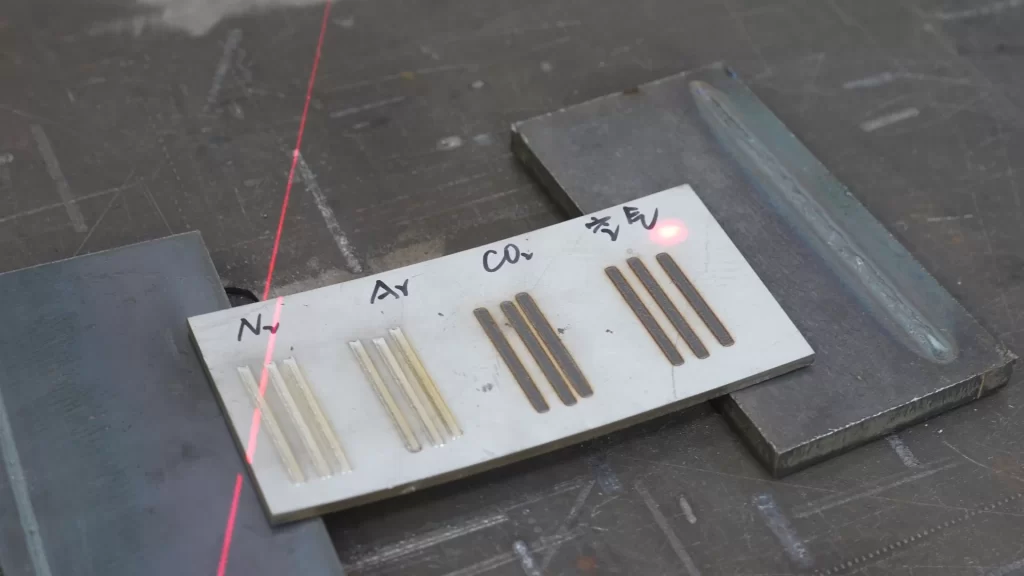
Professional Tips From Handheld Laser Welding Machine Manufacturer
As a professional handheld laser welding machine manufacturer with rich industrial production experience, we suggest all users select high‑purity shielding gas strictly according to welding materials. Match professional gas flow parameters for handheld laser welding machine for stainless steel, handheld laser welding machine for Aluminum and handheld laser welding machine for Carbon Steel. Standard gas flow can effectively avoid turbulent air and air invasion, ensuring stable welding quality and long‑term stable operation of industrial handheld laser welding machines.
FAQ
Q1: Can nitrogen fully replace argon for a handheld laser welding machine for stainless steel?
Q2: Why cannot I use nitrogen on a handheld laser welding machine for Aluminum?
Q3: Is CO₂ suitable for handheld laser welding machine for Carbon Steel?
Q4: Can I use compressed air as shielding gas to save cost for handheld laser welding machines?
Q5: What gas flow rate should I set for handheld laser welding?
Contact STRION LASER
📞 +028-85812068
🌐 www.strlaser-en.com
📧 str@strlaser.com