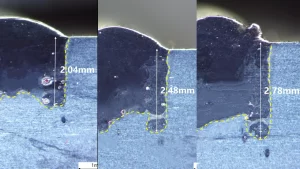
Weld quality depends not only on the welding machine, laser power or operator experience. The condition of the metal surface before welding is equally important. Rust, oxide layers, grease, paint and other contaminants can interfere with energy transfer, shielding gas protection and molten-pool stability, leading to porosity, spatter, weak fusion and inconsistent weld appearance.
Traditional weld preparation methods such as grinding, sandblasting and chemical cleaning can remove these contaminants, but they may also introduce abrasive residue, alter the surface profile, consume large quantities of consumables or require additional waste treatment.
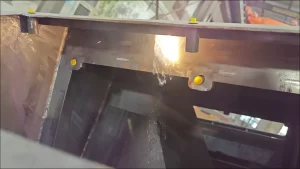
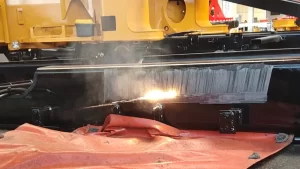
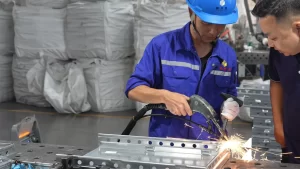
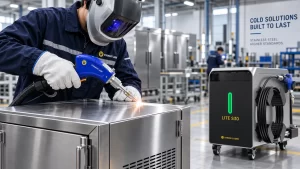
Laser cleaning provides a precise, non-contact alternative for preparing metal surfaces before welding. By directing controlled laser energy onto the contaminated area, manufacturers can remove unwanted surface layers while minimizing mechanical impact on the base material. The process can be used manually or integrated into automated production lines, depending on the workpiece, cleaning area and production requirements.
Why Surface Preparation Matters Before Welding
During welding, contaminants on the workpiece can enter the molten pool or affect how the heat source interacts with the metal. Even when a surface appears visually acceptable, thin oil films, oxidation or coating residue may still reduce weld consistency.
Effective surface preparation helps manufacturers achieve:
- More stable weld penetration and fusion
- Lower risk of porosity and inclusions
- Reduced spatter and post-weld grinding
- More consistent weld appearance
- Better repeatability in automated welding
- Improved coating or inspection results after welding
This is especially important in industries where weld consistency, dimensional accuracy and traceable production quality are required, including automotive manufacturing, shipbuilding, rail transit, pressure equipment, steel fabrication and battery enclosure production.
Common Contaminants That Should Be Removed Before Welding
Rust and Corrosion
Rust creates an unstable and uneven surface. During welding, rust particles and corrosion products may enter the molten pool, contributing to porosity, inclusions and irregular bead formation.
Mechanical grinding can remove rust, but it may be difficult to control on complex geometries, corners and localized welding zones. Laser cleaning can selectively remove rust from the required area without physically contacting the workpiece.
Oxide Layers
Metals such as aluminum, stainless steel and carbon steel naturally develop oxide layers. These oxides have different melting characteristics from the underlying material and may interfere with stable welding.
Pre-weld laser cleaning can remove or reduce oxide layers from the joint area, creating a more consistent surface condition before welding begins.
Oil, Grease and Processing Residue
Lubricants, cutting fluids, fingerprints and storage oils may remain on components after machining, forming or transportation. When heated, these residues can generate gases and carbon contamination around the weld zone.
Laser cleaning can be used for localized removal of light oil and processing residue. For heavy oil contamination, manufacturers may combine degreasing with laser cleaning to achieve the required surface condition.
Paint, Primer and Protective Coatings
Paint, anti-corrosion coatings and primers should normally be removed from the weld path unless the welding procedure specifically permits them. Residual coatings may create smoke, contamination, unstable penetration and harmful emissions.
Laser cleaning allows the operator to remove coatings only from the required welding area, reducing the need to strip an entire component.
How Laser Cleaning Prepares Metal Surfaces for Welding
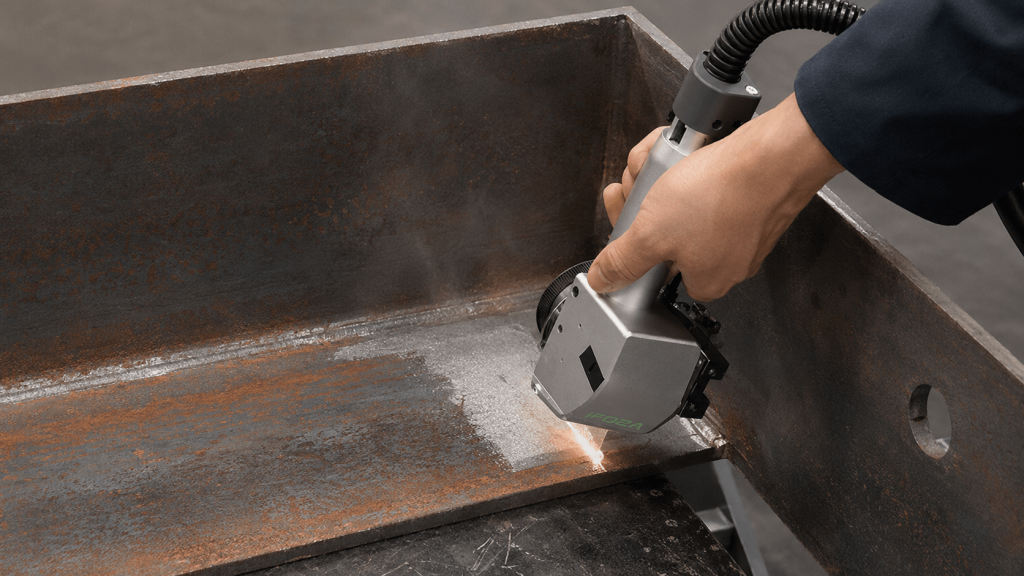
Laser cleaning uses controlled light energy to interact with the contaminant layer. Rust, oxides, paint and other unwanted materials absorb the laser energy and are removed through processes such as rapid thermal expansion, vaporization or ablation.
The base material and the contaminant typically respond differently to the selected laser parameters. By matching the laser power, pulse width, scanning speed and beam pattern to the workpiece, the cleaning process can target the surface contamination while minimizing heat input and mechanical damage.
Unlike grinding or blasting, the cleaning head does not physically contact the workpiece. This reduces tool wear and helps maintain consistent results on repeated production tasks.
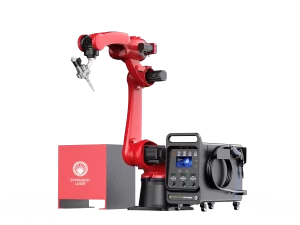
For localized weld preparation, the operator can clean only the joint line or heat-affected working zone. For high-volume production, the process can also be integrated with a robotic arm, motion platform or automated welding station.
Key Benefits of Laser Cleaning Before Welding

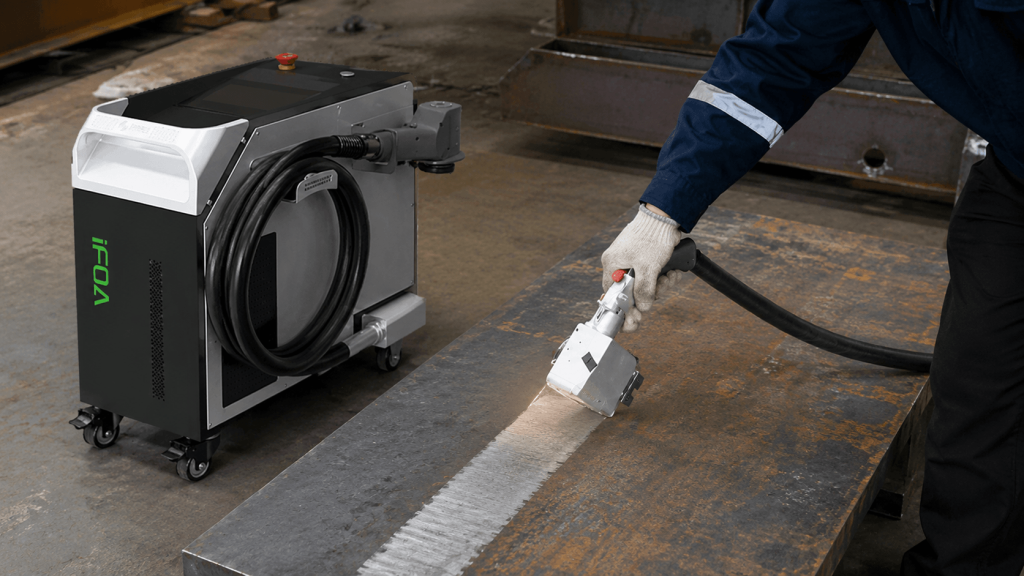
Precise Cleaning of the Weld Zone
Laser cleaning can be directed at a defined area, making it suitable for seams, edges, corners and localized joints. This helps manufacturers avoid unnecessary treatment of the entire component.
Non-Contact Processing
Because the cleaning head does not touch the workpiece, there is no abrasive tool pressure and limited risk of introducing grinding particles or blasting media into the weld zone.
Reduced Consumable Use
Laser cleaning does not require abrasive media, wire wheels or chemical cleaning agents during normal operation. This can reduce recurring consumable purchases, material handling and secondary waste.
Consistent and Repeatable Results
Once suitable process parameters have been established, the same cleaning program can be repeated across similar parts. This is valuable in automated and batch-production environments where surface consistency directly affects welding stability.
Integration with Welding Automation
Laser cleaning can be installed before the welding station or integrated into a coordinated production cell. Automated cleaning helps ensure that each component enters the welding process with a controlled surface condition.
Laser Cleaning vs Traditional Weld Preparation Methods
| Method | Main Advantages | Main Limitations | Typical Use |
|---|---|---|---|
| Laser Cleaning | Precise, non-contact, programmable and low-consumable process | Higher initial equipment investment and requires correct parameter selection | Localized weld preparation, automation and sensitive components |
| Grinding | Simple equipment and familiar operation | Tool wear, inconsistent pressure and possible surface scratches | Small workshops and limited manual preparation |
| Sandblasting | Effective for heavy rust and large surfaces | Abrasive, dusty and requires media recovery and containment | Large structures and heavy-duty surface treatment |
| Chemical Cleaning | Can treat complex shapes and large batches | Chemical handling, rinsing, drying and waste treatment requirements | Batch cleaning and specific contamination types |
| Dry Ice Blasting | Non-abrasive and leaves little secondary blasting residue | Requires continuous dry ice supply and suitable ventilation | Oil, grease and sensitive equipment cleaning |
The most appropriate method depends on the contaminant thickness, component material, cleaning area, production volume and required surface condition. Laser cleaning is particularly suitable when manufacturers need precise, repeatable cleaning without abrasive contact.
For a broader comparison, read Laser Cleaning vs Dry Ice Blasting vs Sandblasting.
Materials Suitable for Pre-Weld Laser Cleaning
Carbon Steel
Carbon steel components commonly require rust, mill scale, oil or paint removal before welding. Laser cleaning can prepare localized weld seams on steel structures, machinery, pipelines, tanks and fabricated components.
Stainless Steel
Stainless steel surfaces may contain oil, fingerprints, heat tint or oxide contamination. Controlled laser cleaning can prepare the weld area while helping preserve the surrounding surface finish.
Aluminum Alloys
Aluminum develops a stable oxide layer that can affect welding behavior. Because aluminum is also sensitive to heat input, the laser cleaning parameters must be selected carefully for the alloy, component thickness and required surface condition.
Galvanized and Coated Steel
For coated steel, the coating may need to be removed from the intended weld path. Laser cleaning can create a defined coating-free zone without mechanically stripping a much larger area.
More information about compatible materials is available in What Materials Can Be Cleaned with a Handheld Laser Cleaning Machine?
Important Laser Cleaning Process Parameters
Successful pre-weld cleaning depends on more than laser power alone. The complete process must be matched to the contaminant and base material.
Laser Power and Energy Density
Higher power may improve cleaning productivity, but excessive energy can overheat thin or sensitive components. The objective is to use enough energy to remove the contaminant without unnecessarily affecting the substrate.
Pulse Width and Frequency
Pulsed laser systems offer adjustable pulse characteristics for different contaminants and surface requirements. The appropriate pulse width and frequency depend on the rust thickness, coating type, material and required cleaning speed.
Scanning Speed and Beam Pattern
Scanning speed controls how long the laser interacts with each area. Beam patterns and cleaning widths should be selected according to the joint geometry and production cycle.
Working Distance and Focus
Correct focusing is necessary for consistent energy delivery. An incorrect working distance may reduce cleaning efficiency or create uneven surface results.
Dust and Fume Extraction
The removed material must be collected with suitable extraction equipment. The extraction system should be selected according to the contaminant, coating composition and production environment.
Industrial Applications
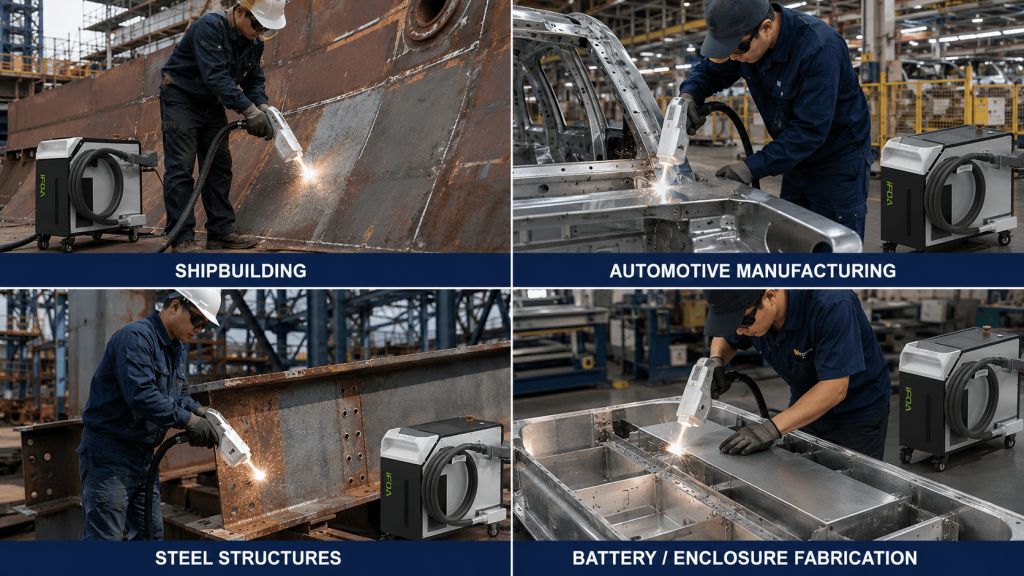
Shipbuilding and Offshore Engineering
Shipyards can use laser cleaning to remove localized rust, paint, salt contamination and oxide layers from welding zones. Portable equipment is particularly useful for complex structures and field maintenance.
Automotive and Transportation Manufacturing
Laser cleaning can prepare body components, battery housings, powertrain parts and structural assemblies before welding or bonding. Automated integration helps support repeatable cleaning in production lines.
Structural Steel and Heavy Fabrication
Steel beams, frames, tanks and fabricated structures often contain rust, primer or storage contamination. Laser cleaning can prepare selected joints while reducing manual grinding around the weld path.
Battery and Electrical Enclosures
Battery trays and metal enclosures require controlled surface preparation to support stable welding and sealing. Laser cleaning can be integrated with automated welding systems for consistent production.
Maintenance and Repair
For repair welding, laser cleaning can remove corrosion, coatings and surface contamination from the damaged area before new material is deposited.
Explore more industrial laser cleaning applications across automotive, shipbuilding, rail transit, mold manufacturing, aerospace and steel construction.
How to Choose a Laser Cleaning Machine for Weld Preparation
Before selecting a laser cleaning system, manufacturers should provide the following application information:
- Base material and material thickness
- Type and thickness of rust, oxide or coating
- Required cleaning width
- Workpiece geometry and joint location
- Manual or automated operating requirement
- Target production cycle
- Required surface condition after cleaning
- Available dust and fume extraction system
The laser power, pulse characteristics, field lens, scanning width and automation configuration should be selected according to these conditions rather than relying only on a general power rating.
STRION LASER iFOA Series for Industrial Surface Preparation
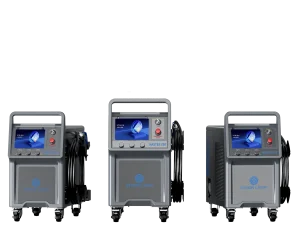
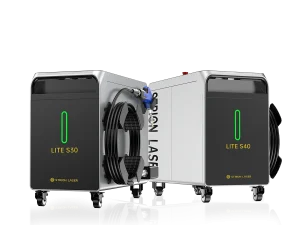
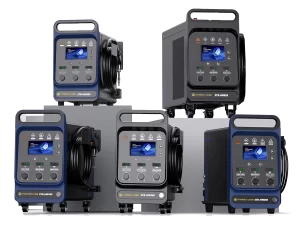
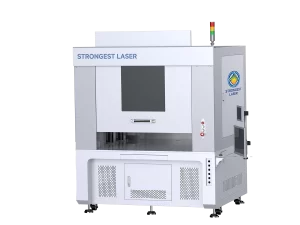
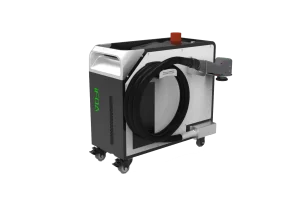
The STRION LASER iFOA Series laser cleaning machine is designed for industrial rust removal, paint removal, oxide cleaning and surface preparation.
Depending on the selected configuration, the iFOA Series uses a MOPA pulsed fiber laser and supports both handheld operation and integration with platforms or robotic arms. The system is designed with adjustable cleaning parameters, multiple cleaning modes and an industrial enclosure for different working environments.
For weld preparation applications, the system can be configured according to the workpiece material, contaminant type, cleaning width and production cycle. This allows manufacturers to develop a repeatable cleaning process before manual or automated welding.
Frequently Asked Questions
Can laser cleaning completely replace grinding before welding?
It can replace grinding in many localized rust, oxide and coating removal applications. However, grinding may still be required when the joint needs mechanical shaping, beveling, dimensional correction or removal of heavy physical defects.
Does laser cleaning damage the metal surface?
When the laser parameters are correctly matched to the material and contaminant, the process can remove unwanted surface layers while minimizing impact on the base material. Parameter testing is particularly important for thin, reflective or heat-sensitive components.
Can laser cleaning remove heavy rust and thick paint?
Laser cleaning can remove heavy contamination, but the required power, cleaning speed and number of passes depend on the layer thickness and production target. Large-area heavy rust or thick coatings may require a higher-power configuration or a combined cleaning process.
Can laser cleaning be integrated with an automated welding line?
Yes. The cleaning head can be mounted on a motion platform or robotic arm and coordinated with part handling and welding equipment. Automation helps create repeatable surface conditions before each welding cycle.
Is laser cleaning suitable for aluminum before welding?
Yes, but the process parameters must be matched carefully to the alloy, oxide condition and component thickness. Sample testing is recommended before establishing the production process.
What information is required for a cleaning test?
Provide the base material, contaminant type, layer thickness, cleaning area, required production speed and photos or samples of the workpiece. This information helps determine the appropriate laser configuration and process parameters.
Get a Laser Cleaning Solution for Your Welding Process
Effective weld preparation starts with a stable and repeatable surface condition. STRION LASER can evaluate your material, contaminant, cleaning width and production requirements and recommend a suitable manual or automated laser cleaning configuration.
Contact STRION LASER to discuss your weld preparation application, request a sample cleaning test or obtain a customized laser cleaning solution.