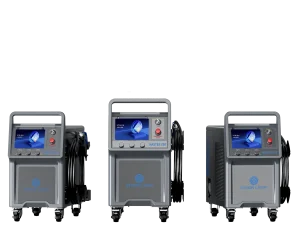
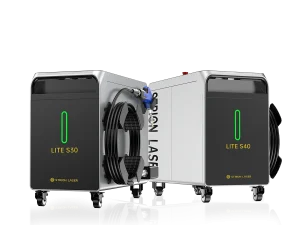
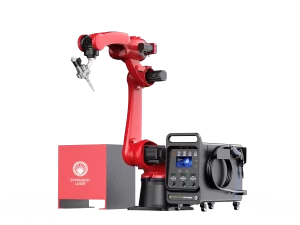
Handheld Laser Welding Machine: Why Fiber Core Diameter Matters More Than You Think
When people compare a handheld laser welding machine, the first number they usually look at is power.
1,500W. 2,000W. 3,000W.
Higher power sounds better. But in real welding, power is only part of the story.
Beam quality, fiber core diameter, welding speed, focus, wobble settings and material properties all affect what actually happens on the workpiece.
At STRION LASER, we believe a laser welding machine should be judged by its welding results—not simply by the specifications printed on a brochure.
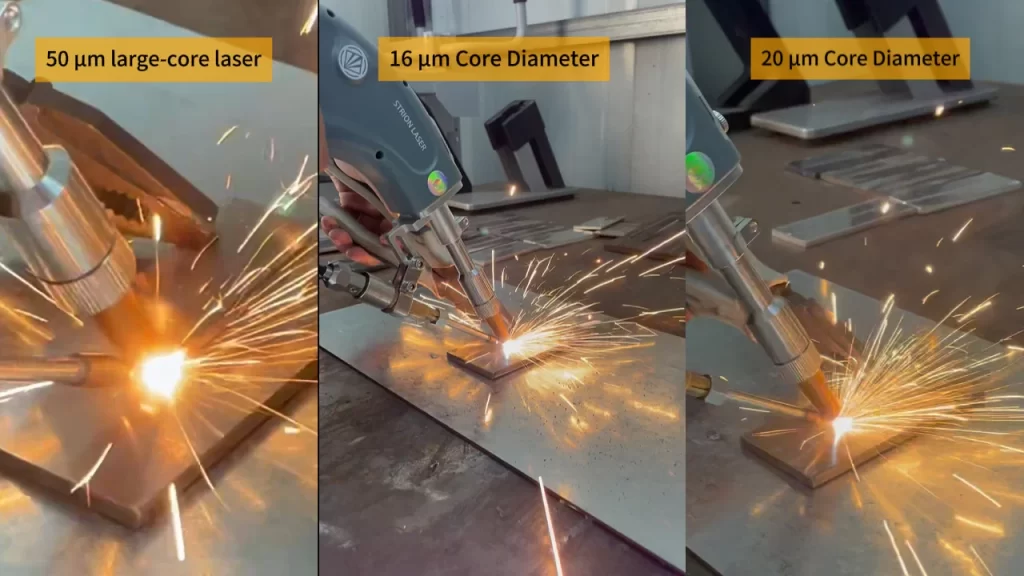
That is why we tested three different fiber core diameters on the same 5 mm stainless steel material.
The result was clear: fiber core diameter is a variable that should not be ignored when choosing a handheld laser welder, especially for thicker materials.
Same Power. Same Material. Different Fiber Core Diameter.
To make the comparison meaningful, we kept the main welding conditions consistent.
- Material: 5 mm stainless steel
- Same laser power
- Same welding speed
- Same defocus condition
- Same welding method
- Only the fiber core diameter was changed
The purpose was simple:
If everything else stays the same, how much difference can fiber core diameter actually make?
The answer was visible in the cross-sections.
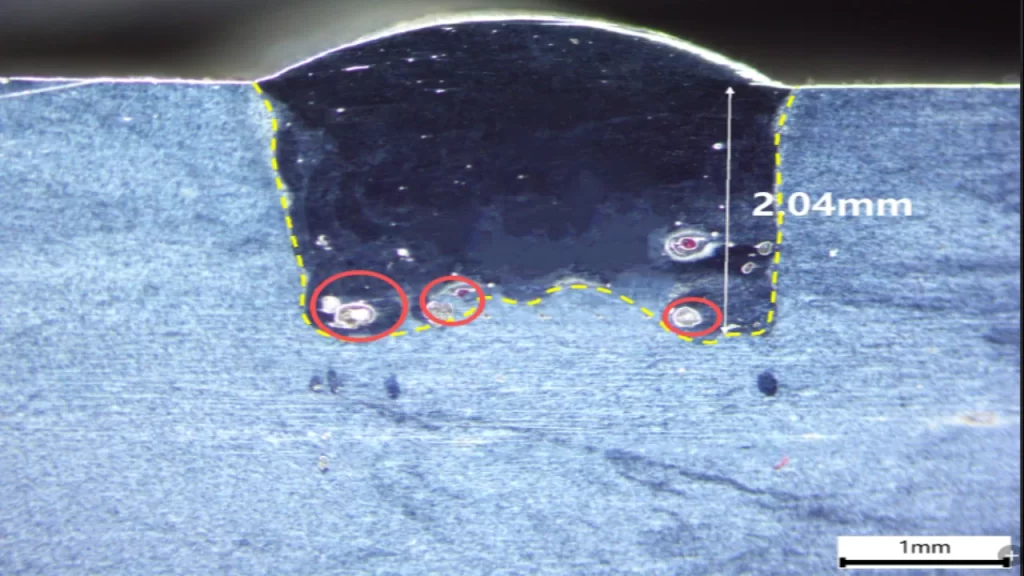
50 μm Fiber Core: The Energy Spreads Out
The 50 μm control group reached an effective penetration of approximately 2.04 mm.
The cross-section showed several round pores near the bottom, together with a less uniform fusion profile.
The issue here is not simply a lack of laser power.
A larger core diameter produces a different beam energy distribution. When energy is less concentrated, achieving deeper penetration becomes more difficult under the same welding conditions.
This is where the common idea of “more watts means better welding” starts to fall short.
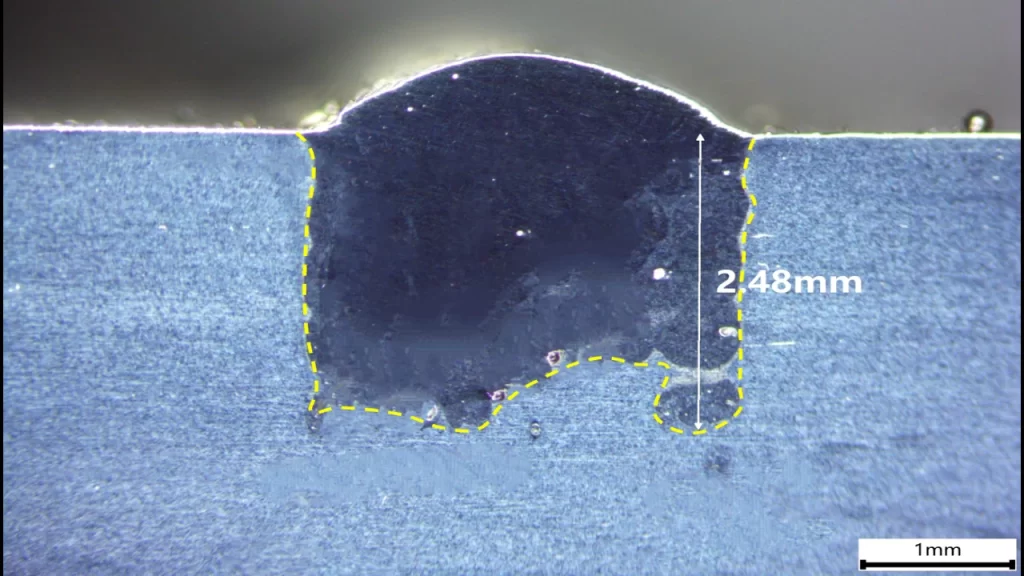
20 μm Fiber Core: A Noticeable Improvement
The MASTER X60 with a 20 μm fiber core achieved approximately 2.48 mm penetration under the test conditions.
That is around 21.6% deeper than the 50 μm control group.
The weld profile was noticeably deeper and more consistent, with only a small number of fine pores at the bottom.
For us, this result is important because the laser power itself was not the only factor changing.
The beam delivery characteristics changed.
And the weld responded accordingly.
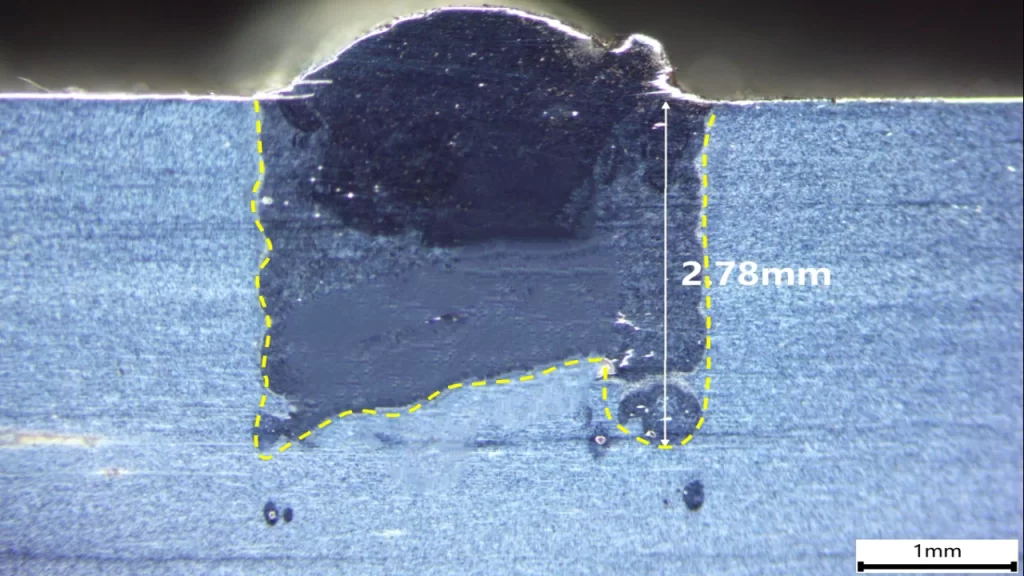
16 μm MASTER X50: The Deepest Penetration in the Test
The MASTER X50, using a 16 μm fiber core, reached approximately 2.78 mm effective penetration.
Compared with the 50 μm control group, penetration increased by around 36.3%.
Among the three test groups, the 16 μm setup produced the deepest and most uniform weld profile.
There were only sparse, very small pores, with no obvious major welding defects observed in the tested cross-section.
This does not mean that 16 μm is automatically the best choice for every material or every welding application.
It means something more practical:
Fiber core diameter can have a measurable impact on laser welding performance, and it deserves more attention when choosing laser welding equipment.
Why Does Fiber Core Diameter Matter?
The basic idea is not complicated.
A smaller fiber core can help concentrate the delivered laser energy into a smaller area.
That can increase energy density at the workpiece and create a more concentrated heat input.
In applications where deeper penetration is important, this can be a significant advantage.
This is particularly relevant when using a small core fiber laser for medium-thickness metal welding.
Smaller Does Not Mean Better in Every Situation
We would not recommend choosing a laser solely because it has the smallest fiber core.
Welding is a system.
Laser power, beam quality, fiber core diameter, focal position, welding speed, wobble width, shielding gas, material type and joint design all work together.
A specification that looks impressive on paper may not automatically produce a better weld.
The real question is:
What does the beam actually do when it reaches the material?
Power Is Important. But Power Alone Is Not Enough.
The market still has a strong habit of comparing laser welding machines almost entirely by wattage.
That makes comparison easy.
But it also makes it incomplete.
A 2,000W machine with better beam delivery and a more suitable process configuration may produce a very different result from another 2,000W machine.
This is why we look at laser welding from a wider perspective:
Power × Beam Quality × Fiber Core Diameter × Process Parameters × Material
That combination matters far more than a single number on a product label.
For manufacturers, the difference eventually shows up in very practical places:
- penetration
- weld appearance
- welding stability
- operator consistency
- rework
- grinding
- production speed
That is what a handheld laser welder needs to solve.
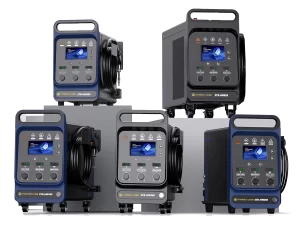
MASTER X50 and MASTER X60: Designed Around the Welding Result
The 5 mm stainless steel test gave us a useful comparison between different fiber core configurations.
The MASTER X50 with a 16 μm core delivered the deepest penetration in this test, while the MASTER X60 with a 20 μm core also showed a clear improvement over the 50 μm control group.
But the point is not to turn one test into a universal rule.
The point is to show what specifications often fail to show:
Small changes in beam delivery can create visible differences on the workpiece.
For us, that is the more meaningful way to develop a handheld laser welding machine.
Not by simply adding more power.
But by making better use of the power already available.
A Laser Welding Machine Should Be Judged on the Workpiece
There is a simple principle behind our approach at STRION LASER:
Manufacturers do not ultimately buy laser power. They buy production capability.
A good laser welding machine should make welding easier to control, more repeatable and more productive.
That requires more than a high-power laser source.
It requires the right beam characteristics, process control and equipment design working together.
Our 5 mm stainless steel test is one example of this approach.
The result does not prove that one fiber core diameter is universally superior.
It proves that fiber core diameter is a real and measurable factor in laser welding performance—and one that should be considered alongside power when selecting a handheld laser welder.
For anyone evaluating a handheld laser welding machine, that is probably a better question to ask than simply:
“How many watts does it have?”
Contact STRION LASER
📞 +028-85812068
🌐 www.strlaser-en.com
📧 str@strlaser.com