Can a Beginner Really Weld Sheet Metal Cabinets? A 2000W Laser Welding Case
For sheet metal factories, finding experienced welders can be harder than finding new orders.
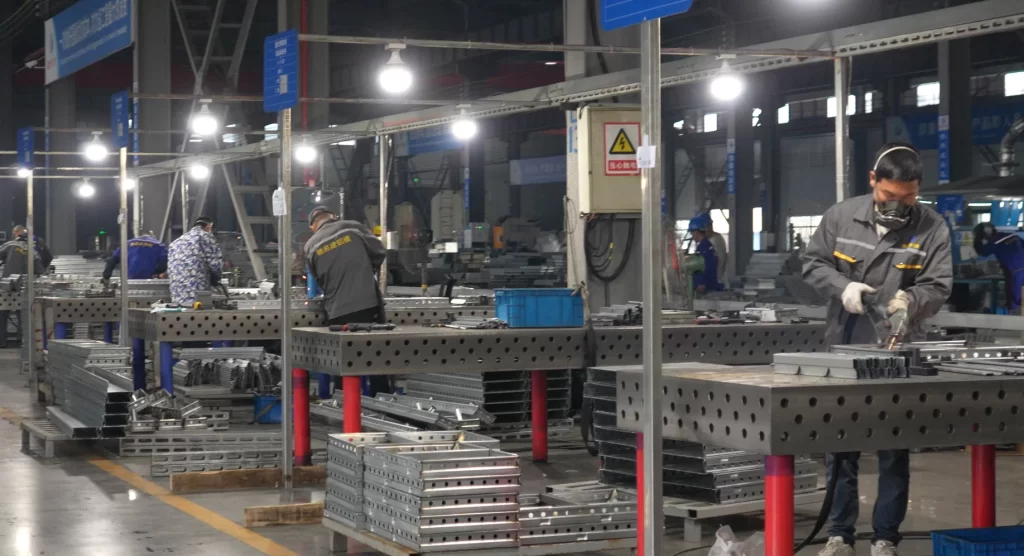
This was exactly the situation faced by a sheet metal processing factory in Hunan, China. The factory produces electrical enclosures, equipment cabinets and galvanized sheet metal housings in batches. Its daily welding work is repetitive, but the production pressure is high, especially during peak seasons.
The factory was looking for a practical way to make sheet metal welding easier for new operators, while reducing distortion, grinding work and dependence on highly experienced welders.
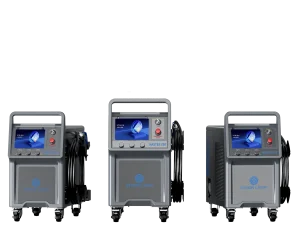
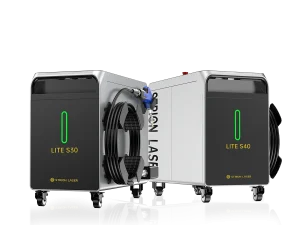
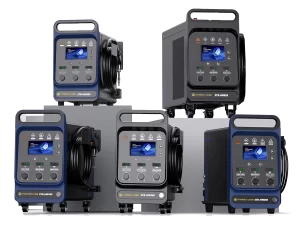
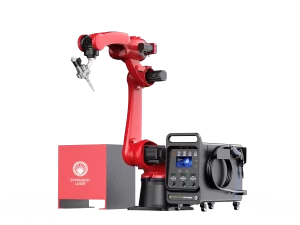
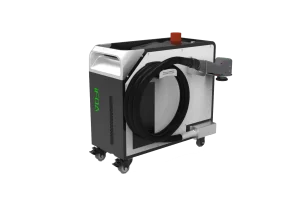
The solution was a STRION LASER Master X60 2000W handheld laser welding machine equipped with a self-developed wobble welding torch.
The interesting part of this case was not simply the welding speed.
It was how the factory changed the way its operators handled batch sheet metal welding.
The Challenge: Welding Capacity Was Limited by People
The factory previously relied mainly on conventional gas metal arc welding for its sheet metal production.
The process was familiar, but several problems became increasingly obvious as production volume increased.
Long Training Time
New operators could need 1–2 months to become familiar with the welding process.
This created a problem during periods of rapid order growth.
Hiring more people did not automatically mean adding more production capacity.
The factory still needed to train them.
Heat Deformation
The factory works mainly with relatively thin sheet metal.
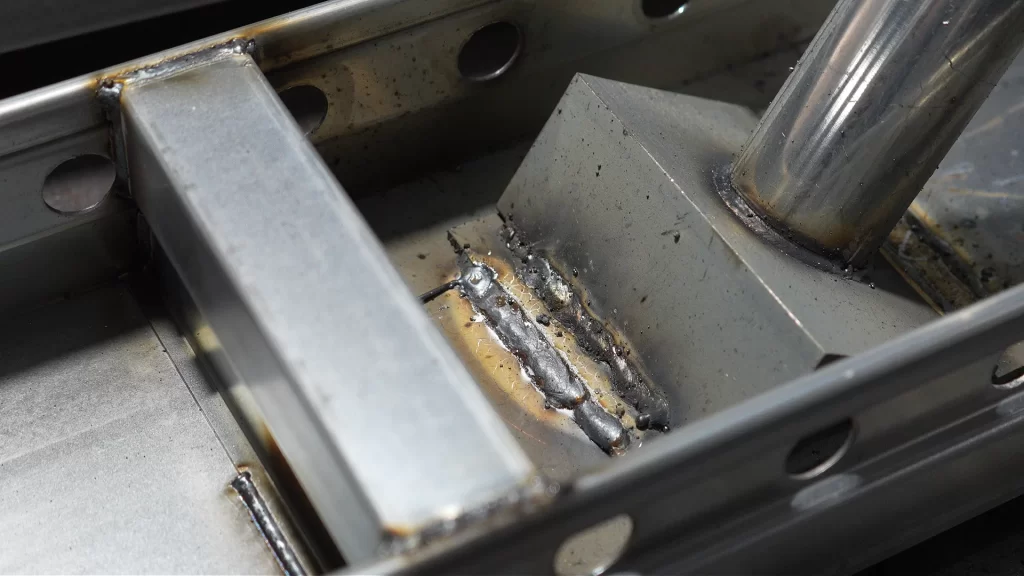
With conventional welding, higher heat input can lead to deformation, particularly on long seams and visible cabinet panels.
Once deformation occurs, additional correction and finishing may be required.
More Grinding After Welding
Welding was also only one part of the process.
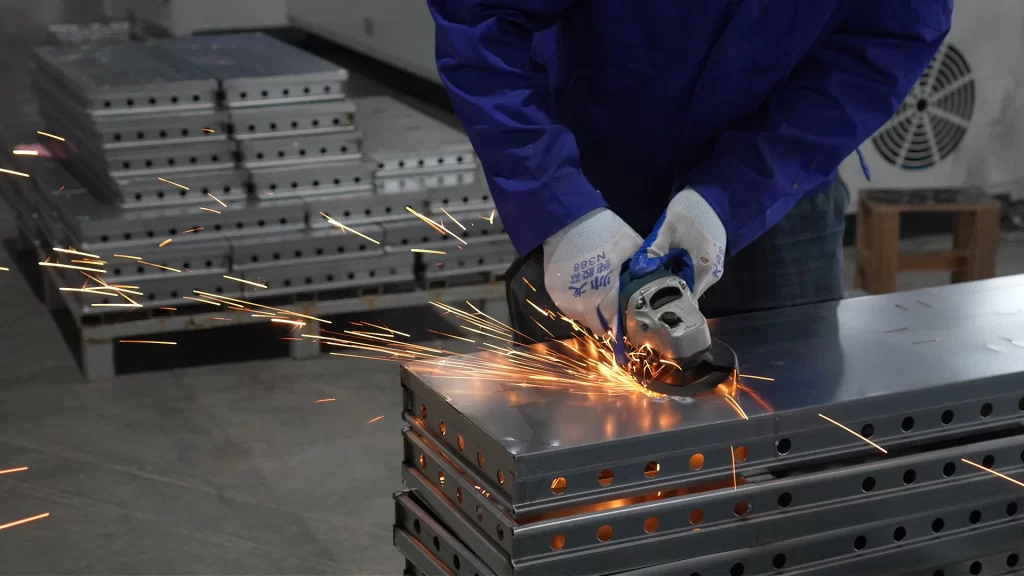
Spatter and uneven weld appearance meant that operators often needed additional grinding and polishing before the parts could move to the next production stage.
For batch production, these additional operations quickly add up.
The Solution: STRION LASER Master X60 2000W Handheld Laser Welding Machine
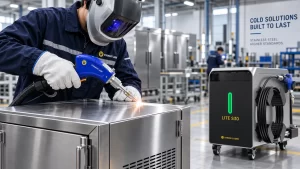
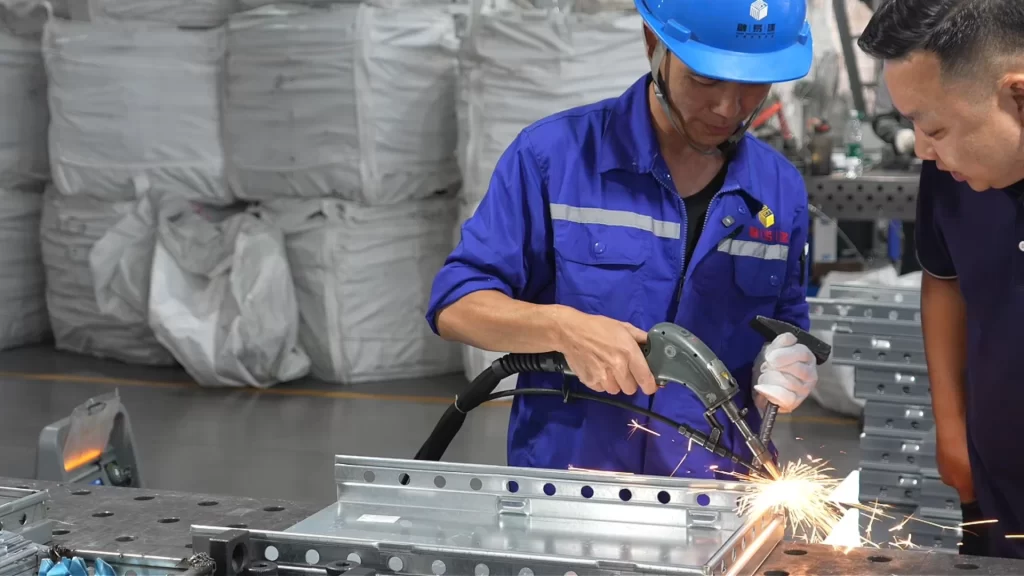
To address these problems, the factory introduced the STRION LASER Master X60, a 2000W handheld laser welding machine equipped with a self-developed wobble welding torch.
The equipment was applied to the factory’s typical sheet metal applications, including:
- 1.5–3 mm stainless steel
- Carbon steel sheet metal
- Galvanized and aluminum-zinc coated sheet metal
- Electrical cabinets
- Equipment enclosures
- Sheet metal housings
The goal was not simply to replace the existing welding process.
The factory wanted to create a welding process that was easier for ordinary operators to learn and repeat.
The First Change: Operators Could Get Started Much Faster
One of the most noticeable changes was operator training.
According to the customer, an ordinary operator could begin independent operation after approximately half a day of training under the factory’s established process.
This does not mean laser welding requires no training.
Material, thickness, joint gap, shielding gas and process parameters still need to be properly controlled.
The difference is that operators do not need to spend the same amount of time developing the manual welding technique required by traditional processes.
For factories producing similar products repeatedly, this is important.
The easier a process is to standardize, the easier it becomes to scale production.
The Second Change: Faster Welding, Less Heat
According to the factory’s production comparison, the Master X60 achieved approximately 3× the welding speed of its previous conventional welding process on typical sheet metal applications.
The exact result depends on material, thickness, joint design and welding parameters.
But speed was not the only improvement.
The factory also reported:
- More consistent weld appearance
- Less heat-related deformation
- Less weld spatter
- Shorter processing time
- Easier post-welding finishing
For thin sheet metal, controlling heat input is particularly important.
A faster welding process is useful.
A faster process that also reduces downstream work is more valuable.
The Third Change: Less Grinding After Welding
For sheet metal manufacturers, the real production cost of welding does not stop when the laser or welding torch stops.
There is still grinding.
There is still polishing.
There is still surface preparation.
In this case, the factory reported that its grinding and polishing workload was reduced by approximately 60% on its typical applications.
The customer attributed the reduction mainly to:
Less spatter + cleaner weld seams + less deformation.
This matters particularly for electrical cabinets and equipment enclosures, where the external appearance of the finished part is important.
When hundreds of parts are produced, reducing several minutes of post-processing on each part can have a noticeable effect on total production time.
Why Does This Matter More for Batch Production?
A factory producing one custom component has different priorities from a factory producing hundreds of similar cabinets.
For batch sheet metal production, manufacturers usually care about:
| Production Factor | Traditional Challenge | Laser Welding Approach |
|---|---|---|
| Operator training | Long learning period | Easier process to standardize |
| Welding speed | Relatively slow | Higher speed in suitable applications |
| Heat input | Greater deformation risk | Concentrated laser heat source |
| Weld spatter | More post-processing | Less spatter reported |
| Grinding | More finishing work | Reduced workload |
| Production scaling | Depends heavily on skilled welders | Easier to train additional operators |
The key point is not that laser welding eliminates every production problem.
It is that it can move more of the welding process from individual skill toward standardized operation.
From “Finding Welders” to “Training Operators”
This is perhaps the most important lesson from the Hunan customer.
The previous production model looked like this:
More orders → more welders needed → difficult recruitment → long training → limited capacity
After introducing the Master X60, the factory could move toward:
More orders → train operators → use standardized parameters → increase production capacity
Experienced welders are still valuable.
They remain important for process development, quality control and difficult welding applications.
But repetitive cabinet and enclosure welding does not necessarily need every operator to have years of manual welding experience.
That is where a handheld laser welding machine for sheet metal can provide practical value.
Customer Feedback
The customer summarized the change simply:
“It used to be difficult to recruit welders. Now ordinary employees can start welding after half a day of training. The Master X60 produces flat welds with less distortion, and we spend much less time grinding. During the busy season, our production capacity can increase.”
For this factory, the biggest benefit was not a single machine specification.
It was the change in the production process.
Welding became easier to train, easier to repeat and easier to scale.
The Bigger Question for Sheet Metal Manufacturers
The Hunan customer case highlights a broader change in sheet metal welding.
The question is no longer only:
“How fast can this machine weld?”
A better production question is:
“How much easier can we make the welding process to scale?”
For a batch-production factory, the answer may involve more than welding speed.
It can involve:
Faster welding.
Less deformation.
Less grinding.
Shorter operator training.
More repeatable production.
That is where handheld laser welding is becoming an increasingly practical option for sheet metal manufacturers.
STRION Master X60 for Sheet Metal Welding
The STRION LASER Master X60 2000W handheld laser welding machine is designed for industrial welding applications involving materials such as stainless steel and carbon steel.
For electrical cabinet manufacturers, equipment enclosure producers and sheet metal fabricators, the most useful way to evaluate the machine is through actual production samples.
Send us your material, thickness, joint type and application. STRION LASER can evaluate the welding process based on your workpiece.
Contact STRION LASER
📞 +028-85812068
🌐 www.strlaser-en.com
📧 str@strlaser.com
FAQ About Handheld Laser Welding for Sheet Metal
Can a beginner use a handheld laser welding machine?
A handheld laser welding machine is generally easier to learn than many conventional welding processes for repetitive sheet metal applications. However, operators still need proper training in machine operation, material preparation, shielding gas and safety procedures.
What thickness can a handheld laser welding machine weld?
The suitable thickness depends on laser power, material, joint design and welding parameters. The STRION Master X60 2000W is used for a range of industrial sheet metal applications, including 1.5–3 mm stainless steel and carbon steel in this customer case.
Is laser welding suitable for electrical cabinets?
Yes. Laser welding can be suitable for electrical cabinets and equipment enclosures where manufacturers need consistent seams, low heat deformation and reduced post-welding finishing.
Does laser welding reduce grinding?
It can. In this Hunan customer case, the factory reported approximately 60% less grinding and polishing work after adopting the Master X60 for its typical sheet metal applications.
Is a handheld laser welding machine suitable for batch production?
It can be particularly useful for repetitive batch welding because standardized parameters can make the process easier to reproduce between operators.