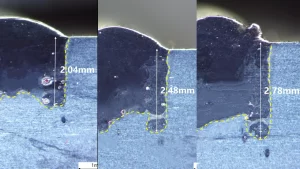
Manufacturers of stainless steel cabinets, electrical enclosures, control boxes and industrial housings face a common welding challenge: the material is often thin, visible surfaces need to remain clean and flat, and production may involve dozens or even hundreds of weld seams every day.
Traditional TIG and MIG welding can complete these jobs, but excessive heat input may increase deformation, discoloration and post-weld grinding requirements, especially when working with thin stainless steel panels.
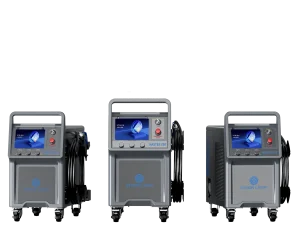
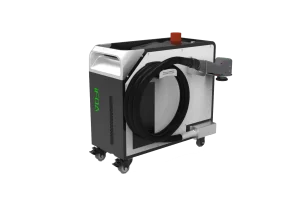
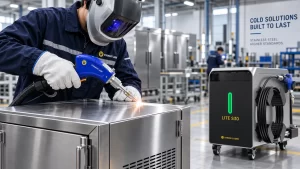
For these applications, a handheld laser welding machine provides manufacturers with an efficient option for producing clean and consistent welds while reducing unnecessary post-processing.
Handheld laser welding is suitable for many cabinet and enclosure applications, including electrical cabinets, machinery housings, stainless steel furniture, ventilation equipment and other sheet metal products.
Why Cabinet and Enclosure Welding Is Challenging
Cabinet manufacturing may appear simple compared with heavy structural fabrication, but thin-sheet products place high demands on welding quality.
Typical products include:
- Electrical control cabinets
- Industrial equipment enclosures
- Distribution boxes
- Server and communication cabinets
- Stainless steel furniture
- Machinery housings
- Battery enclosures
- Ventilation cabinets
- Food processing equipment cabinets
For these products, welding performance is judged not only by joint strength. Manufacturers also need to control:
- Panel deformation
- Weld discoloration
- Visible seam appearance
- Dimensional accuracy
- Grinding and polishing time
- Production speed
- Consistency between operators
A welding process that introduces excessive heat may require additional correction after welding, reducing the efficiency of the complete manufacturing process.
Why Handheld Laser Welding Works Well for Thin-Sheet Cabinets
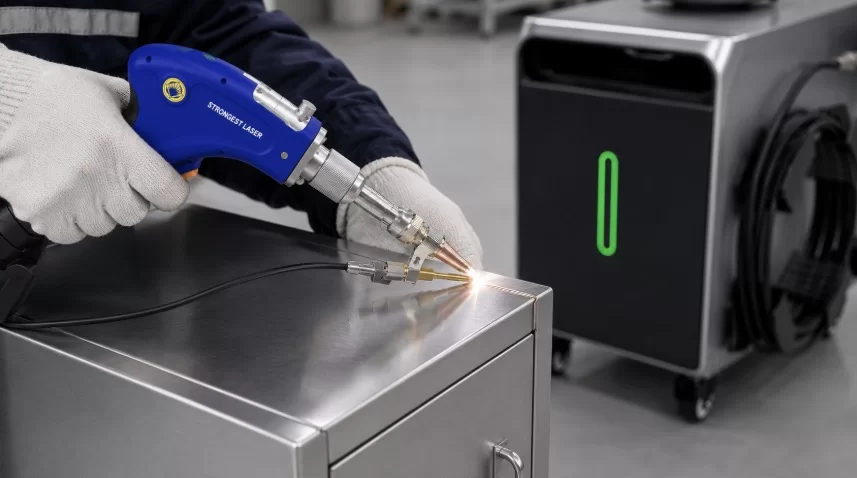
Handheld laser welding uses a concentrated laser beam to create the weld. Compared with many conventional arc welding processes, the heat is concentrated in a relatively small area around the joint.
This characteristic makes a handheld laser welding machine particularly useful for thin-sheet products where distortion, appearance and production efficiency are important considerations.
Lower Heat Input and Reduced Distortion
Thin stainless steel panels can warp when excessive heat accumulates around the weld area.
Because laser welding concentrates energy at the joint, manufacturers can reduce unnecessary heat exposure around the surrounding panel when suitable parameters are used.
For cabinet and enclosure manufacturers, this can help maintain:
- Flatter panels
- Straighter edges
- Better door alignment
- More accurate enclosure dimensions
Reduced deformation can also decrease the amount of mechanical correction required after welding.
Cleaner Weld Appearance
Cabinets, enclosures and stainless steel furniture often contain visible welded surfaces.
Customers may expect smooth joints with minimal:
- Spatter
- Burn marks
- Discoloration
- Excessive weld reinforcement
- Grinding marks
When the joint preparation and welding parameters are properly controlled, handheld laser welding can produce narrow and visually consistent seams.
This is particularly valuable for stainless steel products where the appearance of the finished surface is part of the product quality.
Less Post-Weld Grinding and Polishing
The welding operation itself is only one part of total manufacturing cost.
After conventional welding, factories may need additional operations such as:
- Grinding the weld
- Removing spatter
- Correcting deformation
- Polishing the surface
- Restoring the appearance of the panel
Reducing these secondary processes can improve overall production efficiency.
Faster Production for Repetitive Cabinet Welds
Cabinet manufacturing commonly involves repetitive joints such as:
- Long straight seams
- Corner joints
- Lap joints
- Enclosure frames
- Internal reinforcement structures
- Door and panel assemblies
Once suitable welding parameters have been established, handheld laser welding can help manufacturers complete repetitive welds more efficiently.
The actual productivity improvement depends on material, thickness, joint design, operator experience and required weld quality, so manufacturers should evaluate their own workpieces instead of relying on a universal welding speed figure.
Typical Cabinet and Enclosure Applications

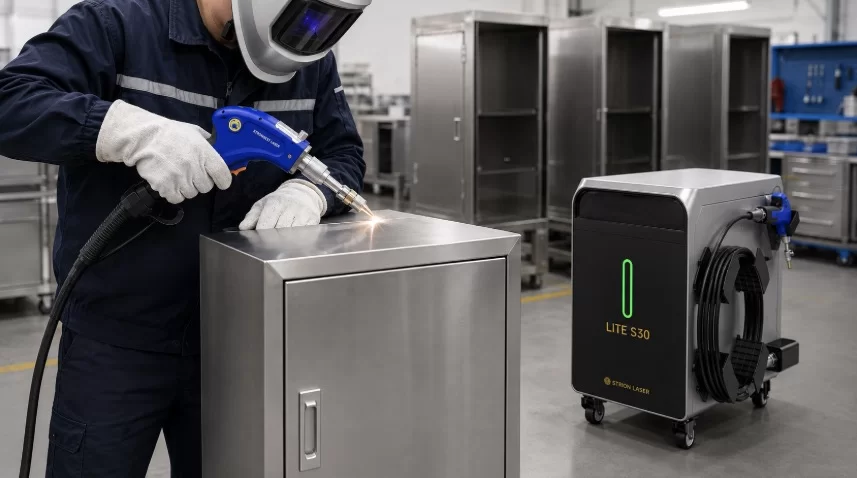
Electrical Control Cabinets
Electrical cabinets commonly use stainless steel, carbon steel or coated sheet metal.
Typical welding areas include:
- Cabinet corners
- Internal frames
- Mounting structures
- Doors
- Reinforcing components
The main production priorities are usually dimensional accuracy, stable weld seams and controlled heat input.
Industrial Equipment Enclosures
Machine manufacturers frequently require sheet metal enclosures for:
- CNC equipment
- Automation systems
- Laser equipment
- Packaging machines
- Electrical equipment
- Industrial control systems
These products often contain long visible seams and relatively large flat panels. Reducing distortion can simplify subsequent assembly and improve the appearance of the finished product.
Stainless Steel Furniture
Handheld laser welding can also be used for products such as:
- Filing cabinets
- Storage cabinets
- Shelves
- Safes
- Lockers
- Stainless steel worktables
These products often require both reliable joints and clean visible surfaces.
HVAC and Ventilation Enclosures
Ventilation cabinets, air-handling equipment and related housings frequently use relatively thin sheet metal.
Typical components may contain:
- Long seams
- Corner joints
- Frames
- Access doors
- Internal partitions
For manufacturers producing these components in batches, reducing welding and finishing time can help improve the overall production flow.
Which Materials Can Be Welded?
Cabinet and enclosure manufacturers commonly process several different metals.
Stainless Steel
Stainless steel is one of the most common materials for products requiring corrosion resistance, clean appearance and long service life.
Typical applications include electrical cabinets, food equipment, laboratory equipment and stainless steel furniture.
Carbon Steel
Carbon steel is widely used for industrial enclosures and equipment frames.
Depending on the finished product, welded components may later receive:
- Powder coating
- Painting
- Plating
- Other surface treatments
Consistent welding can simplify these downstream finishing processes.
Galvanized Steel
Galvanized steel sheets are frequently used for electrical, HVAC and industrial enclosure production.
The welding process should be evaluated carefully because the zinc coating affects material behavior during welding.
Aluminum
Aluminum enclosures are attractive when weight reduction and corrosion resistance are important.
However, aluminum requires suitable welding parameters and stable energy control. Sample testing is recommended before establishing a production process.
More material examples can be found in STRION LASER’s handheld laser welding applications.
What Thickness Can a Handheld Laser Welder Handle?
There is no single thickness limit that applies to every handheld laser welding machine.
Actual welding capability depends on factors such as:
- Laser power
- Material type
- Joint design
- Required penetration
- Welding speed
- Joint gap
- Filler wire
- Welding head configuration
Therefore, cabinet manufacturers should not choose equipment simply by purchasing the highest available laser power.
A better approach is to provide the supplier with:
- Material type
- Minimum and maximum thickness
- Joint type
- Required penetration
- Production volume
- Product photos or drawings
The welding system can then be selected according to the actual workpiece.
How to Select Laser Power for Cabinet Manufacturing
For cabinet production, the objective is not maximum laser power.
The objective is stable welding with sufficient penetration and acceptable production speed without unnecessary heat input.
Minimum and Maximum Sheet Thickness
If most production involves relatively thin stainless steel, selecting a system designed primarily for significantly thicker materials may provide limited practical benefit.
Main Material
Stainless steel, carbon steel, galvanized steel and aluminum require different process considerations.
Production Volume
A small workshop producing custom cabinets has different equipment requirements from a factory producing hundreds of identical enclosures every day.
Joint Design
Common cabinet joints include:
- Butt joints
- Lap joints
- Outside corners
- Inside corners
- Fillet joints
The actual joint geometry affects penetration and parameter selection.
For a more detailed power comparison, see the handheld laser welder power selection guide.
When Is Wire Feeding Required?
Not every cabinet weld requires filler wire.
Autogenous laser welding may be suitable when:
- Part fit-up is accurate
- The joint gap is small
- Sufficient weld strength can be achieved without additional filler material
Wire feeding may become useful when manufacturers need to:
- Compensate for larger gaps
- Increase weld reinforcement
- Improve joint tolerance
- Meet specific mechanical requirements
The decision should therefore be based on actual joint conditions rather than assuming that every application requires filler wire.
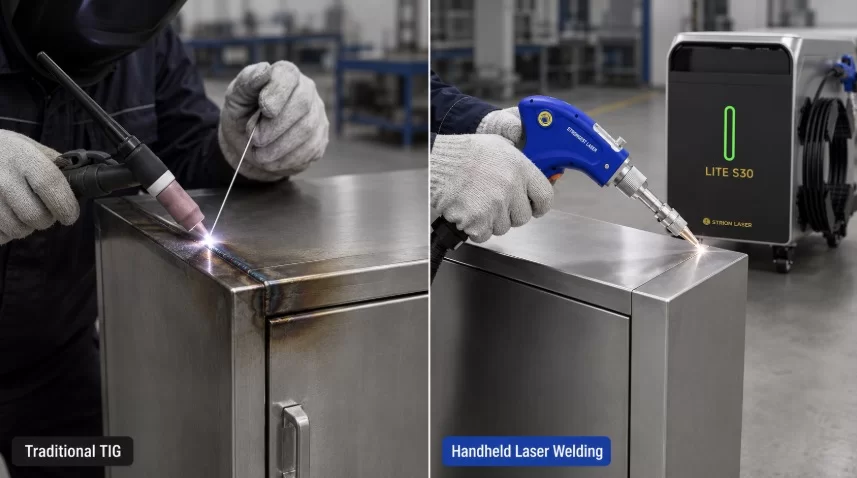
Handheld Laser Welding vs TIG for Cabinet Production
| Factor | Handheld Laser Welding | TIG Welding |
|---|---|---|
| Heat input | More concentrated | Broader heat input |
| Thin-sheet distortion | Can be lower with suitable parameters | Can be higher on thin panels |
| Production speed | High productivity potential | Generally slower |
| Weld appearance | Clean and narrow seams possible | High quality but strongly operator-dependent |
| Operator training | Relatively straightforward for repetitive jobs | Requires experienced welding skill |
| Post-processing | Can reduce grinding and polishing | More finishing may be required |
| Flexibility | Good for repetitive sheet metal production | Highly flexible |
| Initial equipment investment | Higher | Lower |
The correct process still depends on the workpiece and production requirement.
TIG remains suitable for many specialized applications, while manufacturers processing larger volumes of repetitive sheet metal products may benefit from the efficiency of handheld laser welding.
Importance of Joint Fit-Up
Laser welding performs best when the welding process is supported by consistent part preparation.
Poor sheet metal fit-up can create:
- Excessive gaps
- Uneven penetration
- Unstable weld appearance
- Incomplete fusion
- Higher filler-wire requirements
Cabinet manufacturers should therefore also evaluate upstream processes such as:
- Laser cutting
- Bending
- Punching
- Fixture design
- Part positioning
Improving these processes often improves welding consistency as well.
Fixture Design for Cabinets and Enclosures
Fixtures are especially important for thin-sheet assemblies.
During welding, suitable fixtures can help:
- Maintain corner alignment
- Reduce panel movement
- Control joint gaps
- Preserve enclosure dimensions
- Improve repeatability
A fixture does not necessarily need to be complex.
For small-batch production, simple positioning and clamping tools may be sufficient. For larger production volumes, dedicated fixtures can significantly improve consistency between parts.
How to Reduce Distortion When Welding Thin Stainless Steel
Even with laser welding, incorrect parameters or poor process control can still cause deformation.
Use Appropriate Laser Power
Excessive energy should be avoided when the required penetration can be achieved with a lower setting.
Maintain Consistent Travel Speed
Large variations in operator movement can change heat input and weld penetration.
Improve Part Fit-Up
Large or inconsistent gaps may require additional heat or filler material.
Use Appropriate Fixtures
Correct positioning and clamping help maintain panel alignment during welding.
Test the Process Before Production
Welding parameters should be developed and verified on representative samples before beginning large-volume production.
Choosing the Right Handheld Laser Welding Machine
Different cabinet manufacturers have different requirements, so there is no single handheld welding machine that is ideal for every factory.
When evaluating equipment, manufacturers should consider:
- Main material
- Minimum and maximum thickness
- Required welding speed
- Production volume
- Portability requirements
- Cooling system
- Wire feeding requirements
- Available factory space
- Service and technical support
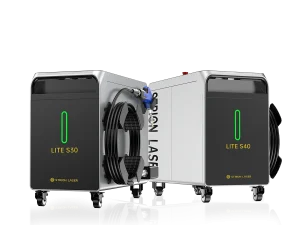
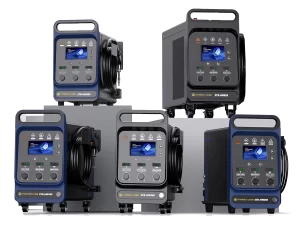
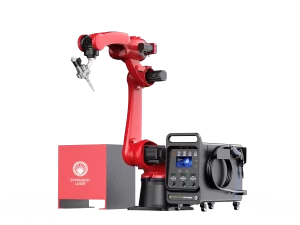
STRION LASER provides multiple handheld laser welding machine configurations for different industrial welding requirements.
For manufacturers focused on relatively thin sheet metal production, the LITE Series handheld laser welder can also be evaluated according to the actual application.
What Information Should You Send Before Requesting a Quote?
For faster equipment selection, cabinet manufacturers should prepare the following information:
| Information | Example |
|---|---|
| Product | Electrical cabinet |
| Material | 304 stainless steel |
| Thickness | 1–3 mm |
| Joint type | Corner / Lap / Butt |
| Maximum weld length | 1200 mm |
| Production quantity | 100 cabinets per day |
| Existing process | TIG welding |
| Main problem | Distortion and grinding time |
| Finish requirement | Visible stainless steel surface |
| Drawings or photos | Recommended |
This information allows the equipment supplier to evaluate the application rather than recommending a machine based only on laser power.
Frequently Asked Questions
Is handheld laser welding suitable for stainless steel cabinets?
Yes. Stainless steel cabinets are a suitable application because they frequently involve thin sheets, long seams and visible surfaces. The exact welding process should still be tested according to the material, thickness and joint design.
Can handheld laser welding reduce cabinet deformation?
The concentrated heat input of laser welding can help reduce distortion when suitable parameters are used. Fixture design, joint preparation and operator technique also remain important.
Do cabinet welds still need grinding after laser welding?
Some applications may require little or no grinding when joint preparation and welding parameters are properly controlled. The final requirement depends on the appearance standard of the finished product.
Is filler wire always required?
No. Whether filler wire is required depends on the joint gap, part fit-up, required reinforcement and welding specification.
Which handheld laser welding machine should I choose?
The correct configuration depends primarily on material, thickness, joint design, production volume and working conditions. Manufacturers should provide actual workpiece information before selecting a system.
Get a Handheld Laser Welding Solution for Your Cabinet Production
If your factory manufactures electrical cabinets, industrial enclosures, stainless steel furniture, machinery housings, ventilation cabinets or other sheet metal products, STRION LASER can evaluate a suitable welding solution based on your actual production requirements.
To receive a more accurate recommendation, prepare:
- Material type
- Maximum and minimum thickness
- Product photos or drawings
- Joint type
- Daily or monthly production volume
- Current welding method
- Main production challenges
With this information, the welding system can be selected according to the real manufacturing process instead of relying only on general machine specifications.