STRION LASER and Slovak Partner STR-474 Exchange Technical Expertise on Handheld Laser Welding Machines
A handheld laser welding machine needs to do more than deliver high laser power. Beam quality, process control, cooling performance, and long-term operating stability all affect how well it performs in real production.
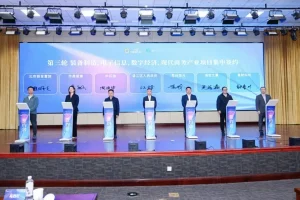
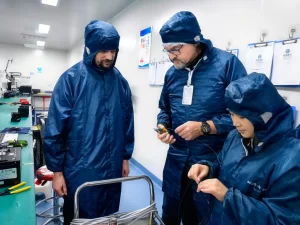
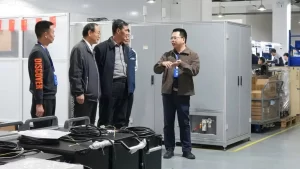
These were among the topics discussed during a recent technical exchange and joint training session between STRION LASER and its Slovak industry partner, STR-474.
The two teams brought their engineering experience together to discuss fiber laser technology, welding processes, equipment operation, and maintenance. The session also gave both sides an opportunity to compare technical approaches and discuss the requirements of European manufacturing applications.
This was a technical exchange and joint training activity, not the authorization of a service center.
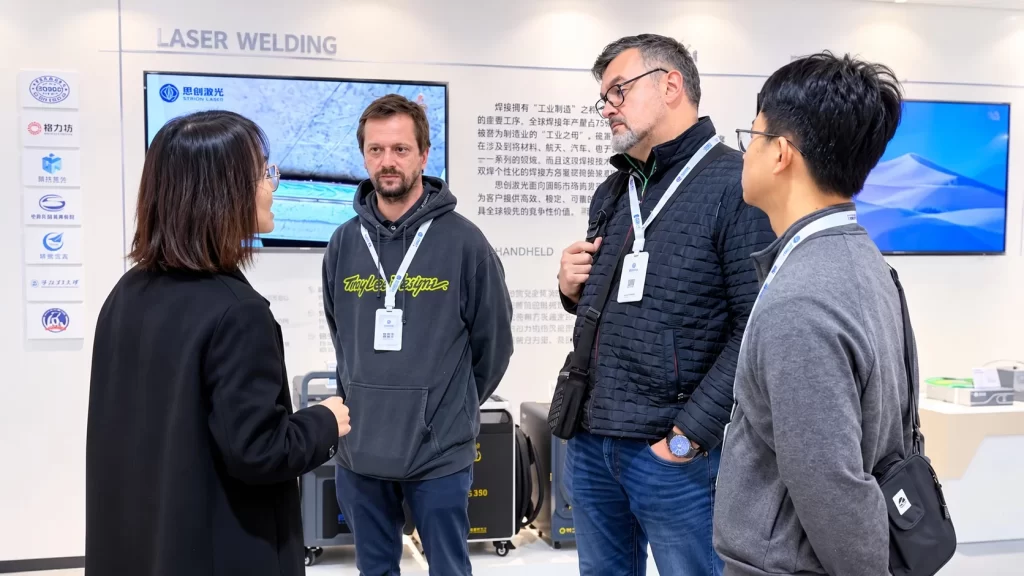
Technical Exchange Focused on Real Manufacturing Requirements
Slovakia has an established manufacturing base, with companies operating in sectors such as automotive components, metal fabrication, and structural steel processing. These industries place practical demands on laser welding equipment, particularly when it comes to consistent weld quality, beam control, and performance during extended production runs.
For STRION LASER, working with an experienced local engineering partner provides a valuable opportunity to understand these requirements more closely.
Rather than simply introducing equipment functions, the exchange focused on how laser technology works and how it performs under different processing conditions. The teams discussed the technical considerations behind handheld laser welding machines and how equipment configurations and welding parameters need to match the materials and workpieces being processed.
The discussions also brought together two perspectives: STRION LASER’s experience in fiber laser development and equipment manufacturing, and STR-474’s understanding of local manufacturing applications and customer requirements.
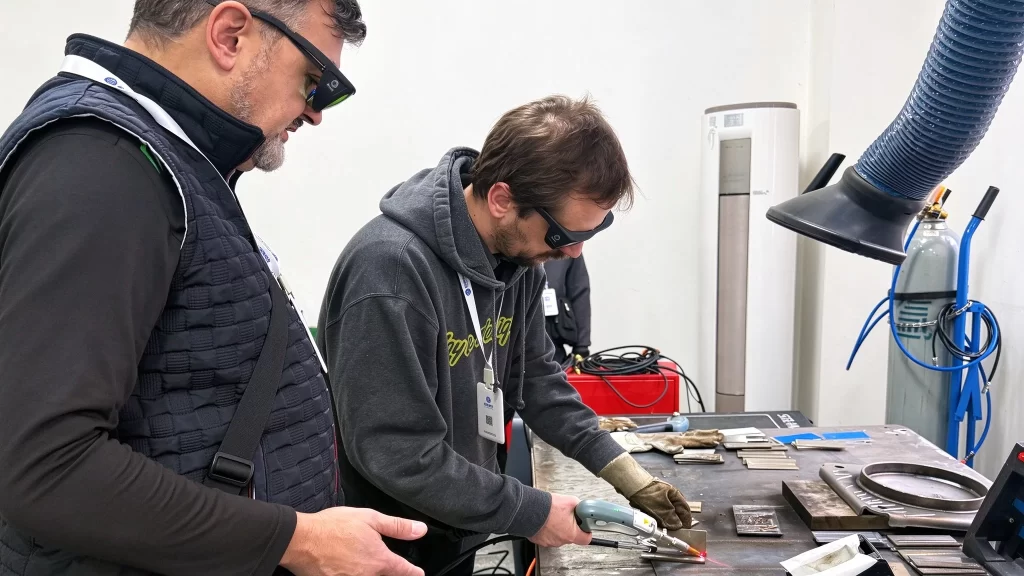
Understanding the Technology Behind a Handheld Laser Welding Machine
The joint training covered several technical areas, including:
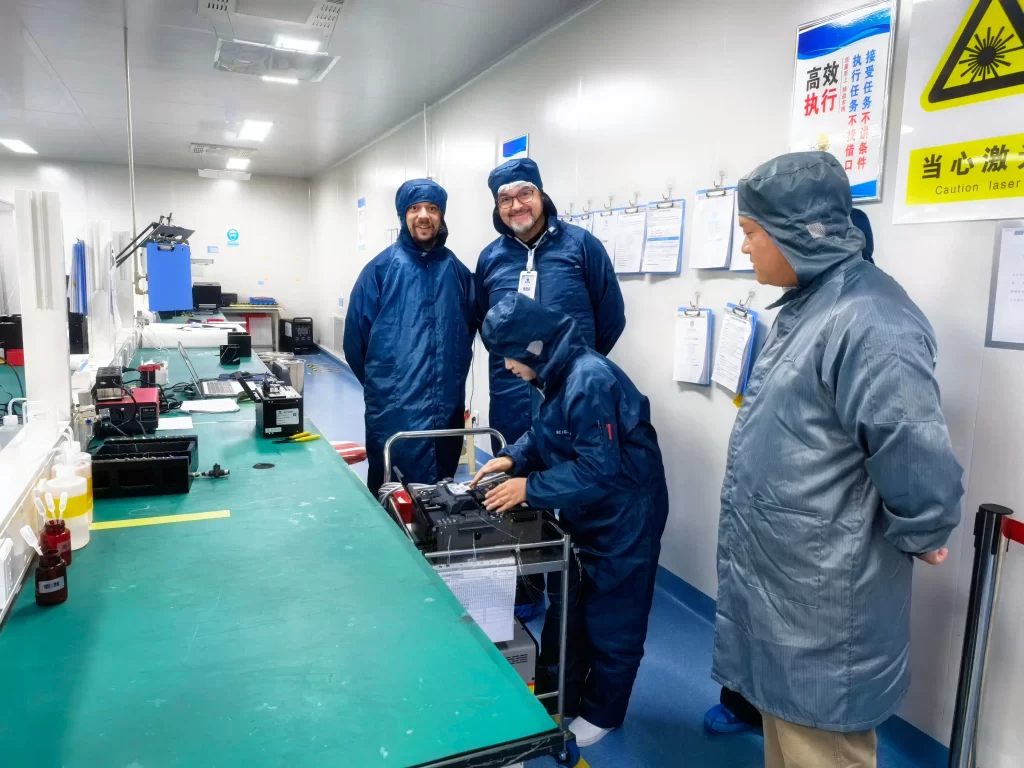
- Equipment operation and standard procedures
- Welding process adjustment and parameter setup
- Machine reliability and maintenance
- Optical fiber splicing techniques
- Fault diagnosis and troubleshooting
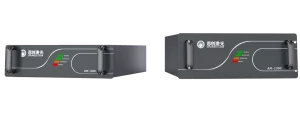
STRION LASER’s technical team explained the underlying design of its self-developed laser sources, including optical path design, thermal management, and small-core-diameter beam delivery.
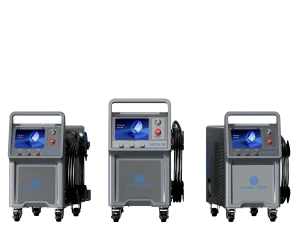
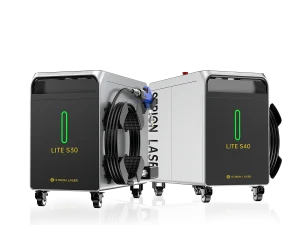
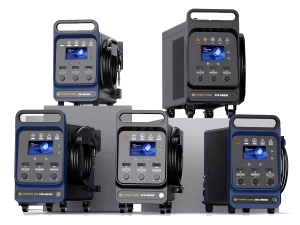
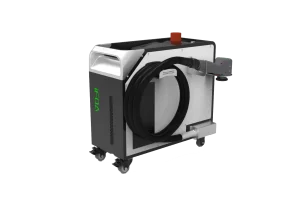
The teams also discussed the engineering considerations behind the Master X and Lite S series handheld laser welding machines, including their approaches to high-penetration welding and high-speed welding of thin materials.
These details matter in daily production. A handheld laser welding machine is not judged by its rated power alone. Beam characteristics, welding parameters, material thickness, joint design, and operator technique all influence the final result.
For manufacturers working with different materials and product structures, understanding these factors helps engineers select suitable processes and make more informed adjustments during production.
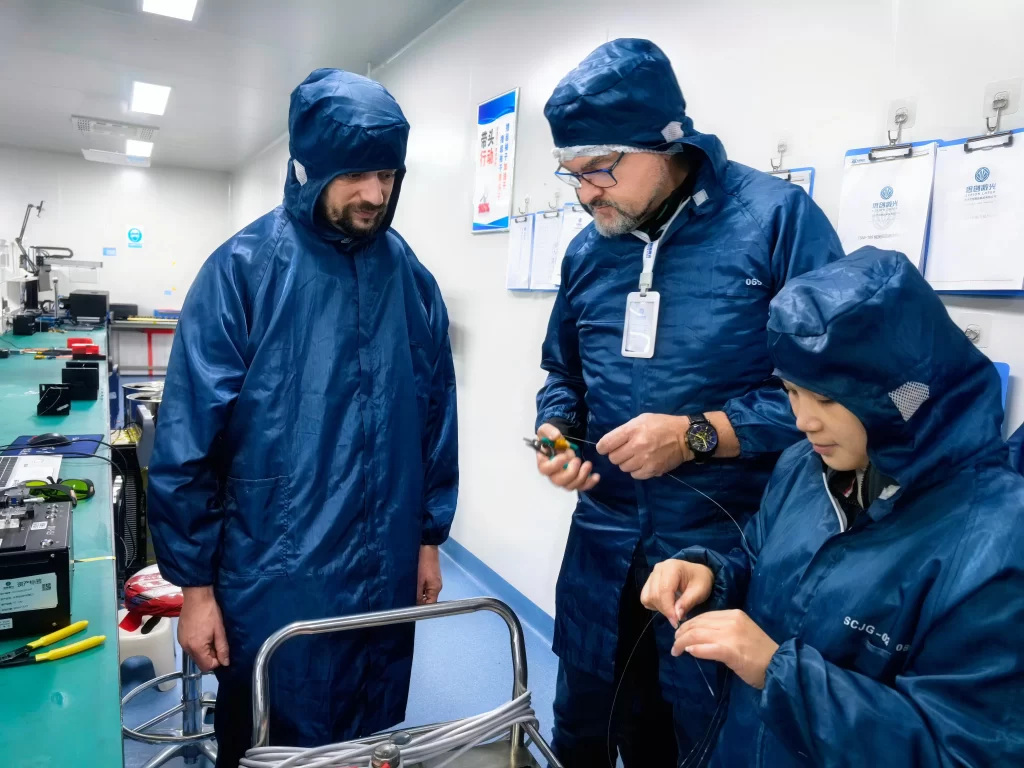
Sharing Practical Experience in Welding Process Development
The exchange was not a one-way technical presentation.
STR-474’s engineers shared feedback based on their experience with automotive components, heavy-duty workpieces, and other local manufacturing applications. They discussed the challenges European customers face when trying to maintain consistent welding results and stable equipment operation over long production periods.
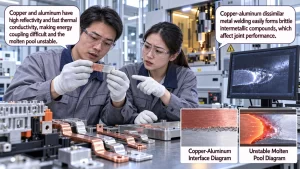
Both teams exchanged views on several practical topics, including dissimilar-material welding and the stability of equipment during continuous operation.
These discussions helped connect equipment development with actual workshop requirements. They also gave STRION LASER a better understanding of the processing challenges that local engineering teams encounter.
For a manufacturer of handheld laser welding machines, feedback from different markets is valuable. Materials, production schedules, workshop environments, and operator experience can vary considerably from one application to another. Direct technical communication helps identify where equipment and welding processes may need further evaluation.
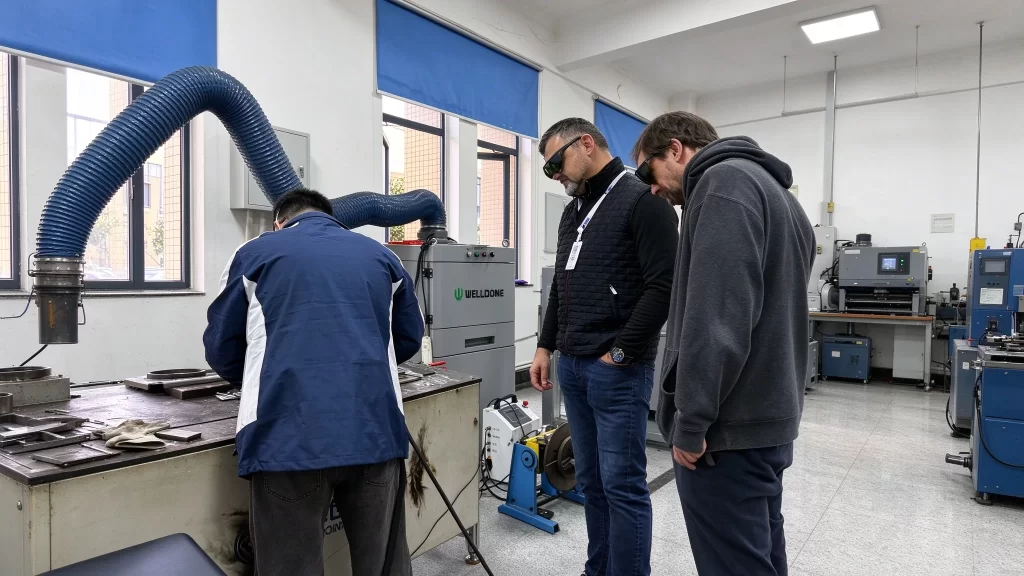
Technical Training Completed, With a Two-Year Validity Certificate
After completing the training program, the participating engineers received technical exchange certificates valid for two years.
The certificates recognize completion of the agreed technical training and provide a common basis for future communication between the two engineering teams.
They are not service center authorization documents or an independent service qualification.
This distinction reflects STRION LASER’s approach to overseas cooperation. The goal is to help partners understand the equipment, laser technology, and process limitations so that technical discussions and project coordination can be more effective.
When local engineers understand how a handheld laser welding machine works, they are better prepared to discuss application requirements, identify potential process issues, and communicate with the manufacturer’s technical team.
Independent Fiber Laser Development at STRION LASER
Behind every laser welding system is the laser source itself. Its optical design, beam quality, thermal management, and integration all influence the performance of the complete machine.
STRION LASER has placed independent R&D at the center of its fiber laser development. Its work covers key stages from laser source development and optical simulation to process testing and equipment improvement.
Two examples of its technical development are small-core-diameter fiber solutions and dual-loop refrigerant direct cooling.
Small-core fiber solutions are developed to improve beam delivery and support different welding applications. Refrigerant direct cooling is another area of in-house development, intended to address thermal management requirements during equipment operation.
These technologies have been developed and refined through material welding tests and application trials. Their suitability still depends on the specific material, thickness, joint design, and processing conditions.
The company continues to use feedback from different manufacturing environments to evaluate its products and identify areas for improvement.
Bringing European Application Feedback Into Product Development
Technical cooperation with overseas partners is not only about introducing products to a new market. It also gives manufacturers access to a wider range of application experience.
For STRION LASER, communication with partners such as STR-474 helps bring feedback from European workshops into its product development process. Questions about process consistency, environmental adaptability, and continuous operation can all provide useful direction for future testing and product improvement.
This is particularly relevant to handheld laser welding machines, where the final result depends on the interaction between the laser source, welding head, process parameters, and the operator’s working conditions.
By combining its own R&D experience with feedback from local engineers, STRION LASER aims to make its laser technology and welding equipment more suitable for different manufacturing applications.
STRION LASER and STR-474: Building Cooperation Through Technical Exchange
The technical exchange with STR-474 marks another step in STRION LASER’s communication with engineering partners in Central and Eastern Europe.
Both teams will continue to explore opportunities for technical discussions, joint welding tests, and the exchange of application experience. Feedback from overseas manufacturing environments will remain an important reference for evaluating laser sources and improving handheld laser welding equipment.
For STRION LASER, international cooperation starts with technical understanding. By sharing engineering knowledge and learning from real production experience, the company aims to build stronger connections with partners and bring independently developed laser technology to more industrial applications.
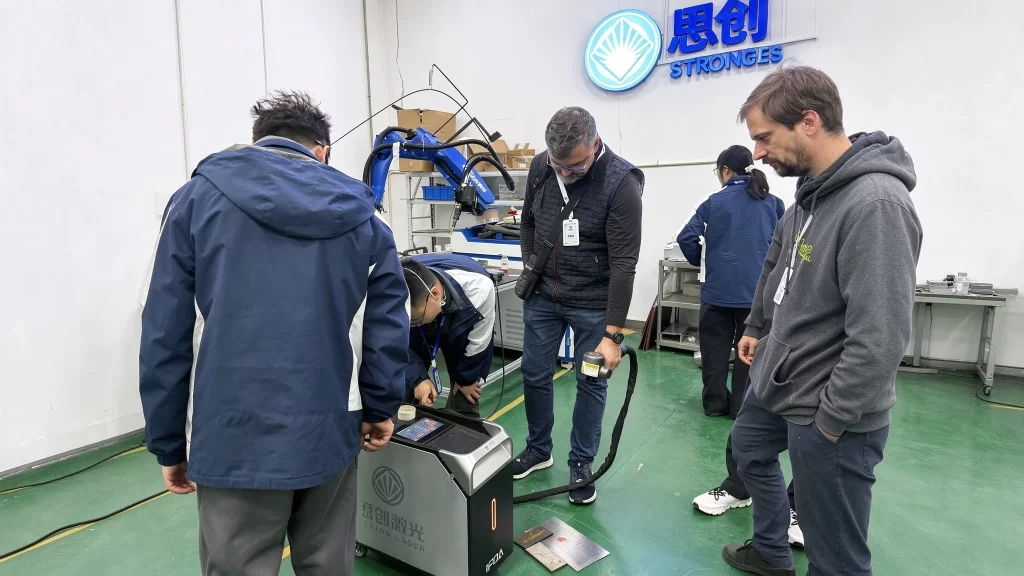
Looking for a handheld laser welding machine for your production requirements? Contact STRION LASER to discuss your materials, workpiece thickness, welding applications, and equipment options.
Contact STRION LASER
📞 +028-85812068
🌐 www.strlaser-en.com
📧 str@strlaser.com