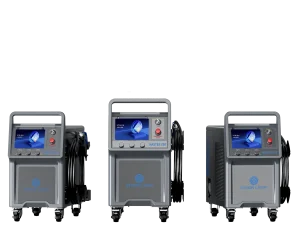
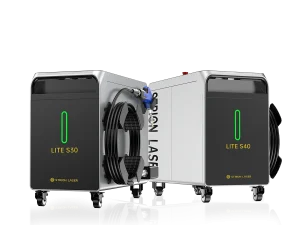
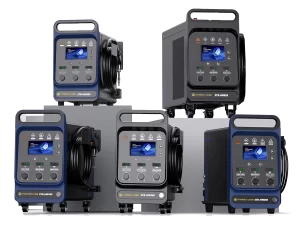
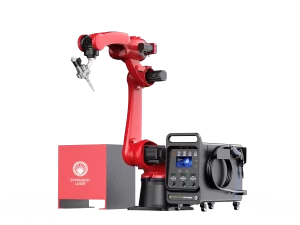
Customer Voice: How MASTER X Handheld Laser Welding Machines Helps Kaituo Improve Sheet-Metal Production
Chengdu, China — August 2026 — For high-end sheet-metal manufacturers, welding is often where production efficiency, product appearance and labor costs meet.
This is especially true for energy storage cabinets, charging-pile enclosures and other sheet-metal products. The weld needs to be strong, consistent and visually clean. At the same time, manufacturers are under pressure to shorten delivery times while dealing with a shortage of experienced welders.
For Sichuan Kaituo Electric Appliance Co. Ltd. (Kaituo), these are not theoretical challenges. They are part of everyday production.
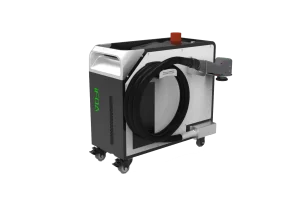
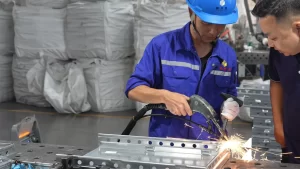
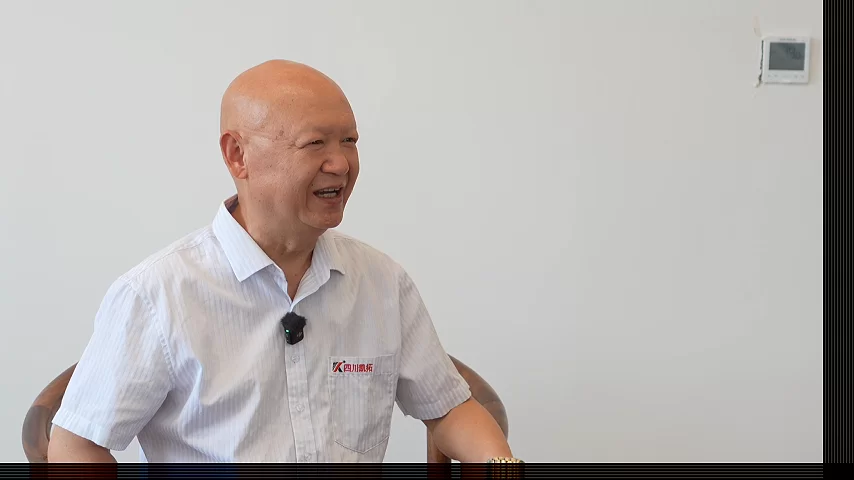
Recently, STRION LASER visited Kaituo and spoke with Liang Bin, Vice President of the Chengdu Sheet Metal Industry Association and Chairman of Sichuan Kaituo Electric Appliance Co. Ltd., about the company’s experience with the MASTER X Series handheld laser welding machines.
What stood out from the conversation was simple: Kaituo was not looking for a machine with impressive specifications. It wanted equipment that could work reliably on the shop floor.
“Welding Is a Challenge We Cannot Avoid”
Kaituo has more than 20 years of experience in precision sheet-metal manufacturing, serving demanding industries including energy storage, new energy, medical equipment and other high-end applications.
Its production includes products such as energy storage cabinets and charging-pile enclosures, where weld appearance and consistency matter almost as much as structural strength.
Liang Bin described the situation directly:
“For high-end sheet-metal manufacturing, welding is a challenge we cannot avoid. For products such as energy storage cabinets, the welds need to be strong and reliable, while also requiring little or even no grinding.”
The problem goes beyond welding itself.
“Experienced welders are becoming harder to recruit. New operators need time to learn, and during batch production, weld quality can vary from one welder to another.”
This creates a chain reaction.
More dependence on experienced welders means greater staffing pressure. Differences between operators can affect weld consistency. Poorer surface appearance creates more grinding work. And every additional finishing step takes time.
For a manufacturer handling multiple orders with tight delivery schedules, these small problems quickly become production problems.
Why Kaituo Turned to Handheld Laser Welding
Kaituo’s production model requires flexibility.
Different orders mean different materials, structures and welding requirements. A welding process that works well for one product may not be the most efficient choice for another.
This is one reason handheld laser welding has become increasingly relevant to sheet-metal manufacturers.
The attraction is not simply welding speed.
A well-configured handheld laser welding machine can make the process more controllable, reduce unnecessary post-weld finishing and lower the skill barrier for routine welding work.
For Kaituo, the question was whether those advantages could translate into actual production results.
After introducing the MASTER X Series, the company found that the equipment could better match its day-to-day manufacturing requirements.
Making Welding Easier for Different Skill Levels
One of the biggest practical advantages Kaituo sees is the reduced dependence on highly experienced welders for routine work.
Traditional welding often relies heavily on operator experience. Small differences in technique can produce visible differences in weld appearance and consistency.
MASTER X approaches this problem from another direction.
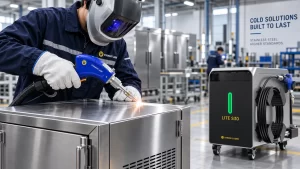
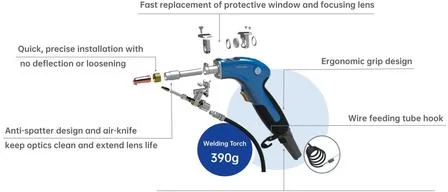
Its welding process and parameter management are designed to make commonly used welding conditions easier to apply. Combined with STRION LASER’s lightweight K Series welding torch, the system is easier for operators to handle during extended production.
For a new employee, the learning curve can be shorter.
For an experienced welder, routine jobs require less repetitive adjustment.
This does not mean skilled welders become unnecessary. In our view, that is the wrong way to look at automation and laser welding.
Good equipment should allow skilled workers to spend more time on difficult work, rather than using their experience to compensate for an inefficient process.
That distinction matters to manufacturers facing labor shortages.
Less Trial and Error with the MASTER Process Library
Parameter adjustment is another area where manufacturers can lose time.
When material, thickness or joint conditions change, operators may need to test and adjust settings before achieving the desired weld.
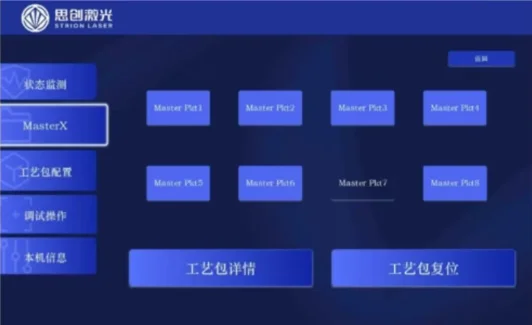
The MASTER process library provides established welding process parameters for common applications, allowing operators to start from a proven process instead of repeatedly experimenting from scratch.
For Kaituo’s high-mix sheet-metal production, this is particularly useful.
The goal is not to remove operator judgment. It is to eliminate unnecessary trial and error.
When a suitable process is already available, operators can focus on the workpiece rather than spending excessive time searching for the right starting point.
Better Weld Appearance Can Reduce Post-Weld Work
For high-end sheet-metal products, welding does not end when the arc or laser stops.
Grinding and polishing can become a significant part of the total production workload, especially when the finished surface needs to meet high appearance standards.
This is one area where laser welding can offer practical value.
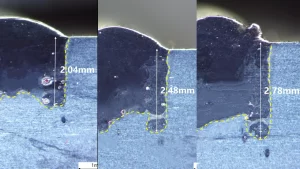
With appropriate process parameters, laser welding can produce clean and consistent weld formation, helping reduce the amount of post-weld finishing required.
For Kaituo, this matters because reducing grinding is not simply about saving one operation.
It means less labor, shorter processing time and more capacity for the next order.
That is a much more meaningful measure of welding efficiency than a speed figure on a product brochure.
What Kaituo Really Looks for in Welding Equipment
Liang Bin summed up the company’s approach clearly:
“We don’t choose equipment based on flashy specifications. What matters is whether it works well on the shop floor, whether it is stable and whether it can genuinely help the factory reduce costs and improve efficiency.”
This is probably the most important point in the entire conversation.
Manufacturers do not ultimately buy laser power.
They buy production capability.
They want fewer problems, less rework, easier operator training and more predictable delivery.
That is why customer feedback is so important to STRION LASER.
STRION LASER’s View: The Shop Floor Is the Real Test
At STRION LASER, product development does not start and end with laboratory testing or specification sheets.
The company works with workshop owners, production managers and operators to understand what actually happens during production.
As a STRION LASER product lead explained:
“Our development does not start from specifications on paper. We talk to workshop owners, foremen and on-site operators. We listen to what actually goes wrong during daily welding work.”
That approach has influenced the development of welding torches, wire-feeding systems and process parameters.
Our view is straightforward:
If a feature does not make production easier, more stable or more efficient, it has limited value to a manufacturer.
For this reason, STRION LASER sees customer feedback as part of product development rather than simply a marketing tool.
From Customer Feedback to Better Laser Welding Solutions
Kaituo’s experience also reflects a wider shift in sheet-metal manufacturing.
The industry is moving beyond the simple question of whether laser welding is faster than traditional welding.
The more important question is whether the complete welding process can help manufacturers build a more flexible production system.
That includes:
- Easier operation
- More consistent weld quality
- Less post-weld grinding
- Lower dependence on individual operators
- Faster process setup
- Stable long-term operation
- Greater potential for automation
This is where STRION LASER believes the next stage of handheld laser welding will develop.
Not around specifications alone, but around how well the technology fits into real manufacturing.
About STRION LASER
Sichuan Strion Laser Technology Co., Ltd. (STRION LASER) develops fiber laser equipment and intelligent manufacturing solutions for industrial applications.
Its product portfolio includes handheld laser welding machines, laser cleaning systems, robotic welding solutions and precision laser processing equipment.
STRION LASER focuses on practical laser processing solutions designed around real manufacturing requirements and customer applications.
Contact STRION LASER
📞 +028-85812068
🌐 www.strlaser-en.com
📧 str@strlaser.com