Stainless Steel Livestock Feed Trough Laser Welding Solution | STRION LASER
High-Efficiency Welding for Modern Livestock Equipment Manufacturing
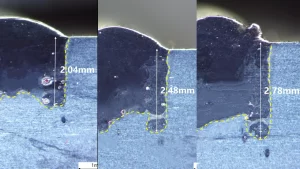
As livestock farms continue to scale up, feed trough manufacturers face increasing demands for cleaner welds, higher production efficiency, and longer service life. Traditional TIG and MIG welding often create excessive heat distortion, grinding work, and hygiene issues caused by uneven weld seams.
STRION LASER has developed a dedicated laser welding solution for stainless steel feed trough production, covering pig feeders, cattle troughs, sheep feeding systems, and other livestock equipment.
Suitable materials include:
- 304 Stainless Steel
- 201 Stainless Steel
- 316L Stainless Steel (coastal and high-corrosion environments)
Common material thickness:
- 0.8mm
- 1.0mm
- 1.2mm
- 1.5mm
Equipment Selection for Feed Trough Production
Solution 1: Small-Batch Production and Sheet Metal Workshops
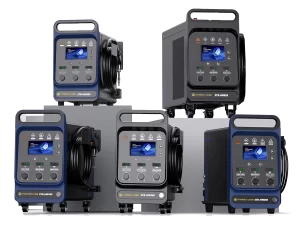
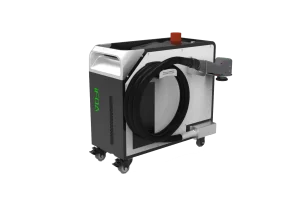
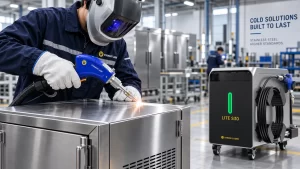
Master Series Handheld Fiber Laser Welder (3000W)
The Master Series are ideal for custom orders, sheet metal fabrication shops, and flexible feed trough production.
Advantages
- Suitable for on-site assembly after bending
- Excellent for curved edges and partition welding
- Minimal heat distortion
- Bright weld seams with little or no grinding required
- Handles non-standard customized trough designs easily
- Lightweight welding gun for long working hours
- Operates on standard 220V power supply
Typical applications include:
- Piglet feeding troughs
- Customized livestock feeders
- Farm equipment repair
- Stainless steel feeding system maintenance
Solution 2: Large-Scale Feed Trough Manufacturing
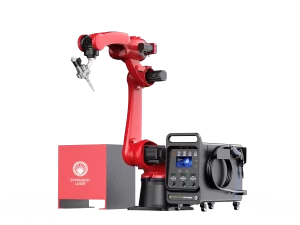
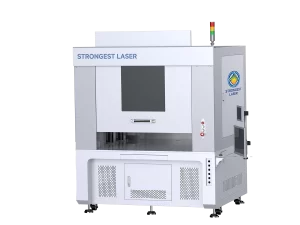
STR-AW Automatic Robotic Laser Welding Workstation
For mass production, STRION LASER’s robotic laser welding systems deliver maximum consistency and efficiency.
Automated Production Process
Cutting → Bending → Fixture Positioning → Robotic Laser Welding → Finished Product
The robotic system performs:
- Continuous welding of long side seams
- R-shaped bottom welding
- Internal corner welding
- Full-length trough assembly
Benefits include:
- Consistent weld quality
- No hidden feed retention gaps
- Improved hygiene performance
- Daily production of hundreds of feeding troughs
Recommended Welding Parameters for Stainless Steel Feed Troughs
Welding Mode
Wobble Welding
Filler Wire
ER308L Stainless Steel Wire (Ø1.0mm)
| Material Thickness | Power Setting | Wire Feed Speed | Wobble Width | Frequency | Argon Flow | Travel Speed |
|---|---|---|---|---|---|---|
| 0.8mm (Nursery Feed Trough) | 45-50% | 42 cm/min | 1.0 mm | 60 Hz | 12 L/min | 1.8 m/min |
| 1.0mm (Piglet Feed Trough) | 55-60% | 50 cm/min | 1.2 mm | 70 Hz | 13 L/min | 1.5 m/min |
| 1.2mm (Finishing Pig Feed Trough) | 62-68% | 55 cm/min | 1.5 mm | 75 Hz | 14 L/min | 1.2 m/min |
| 1.5mm (Cattle & Sheep Feed Trough) | 70-75% | 58 cm/min | 1.8 mm | 80 Hz | 15 L/min | 0.9 m/min |
Process Recommendations
- Use continuous welding mode on the inner side of the trough.
- Maintain bright, smooth weld seams without oxidation.
- Apply intermittent welding on external structural areas to reduce weight and minimize distortion.
Specialized Welding Techniques for Livestock Feed Troughs
Smooth Internal Welds for Better Hygiene
One of the most important requirements for livestock feeding equipment is preventing feed accumulation.
Recommended Design
- Butt welding instead of lap welding
- Assembly gap controlled within 0-0.1mm
- Single-side welding with full penetration
- Smooth internal surfaces without steps
This design prevents:
- Feed residue accumulation
- Mold growth
- Bacterial contamination
For the trough bottom:
- Use R40-R50 formed bends
- Eliminate sharp internal corners
- Round and polish all welded intersections
Welding Feed Partitions
Feed partitions must withstand long-term animal impact.
Recommended process:
- Full weld around partition edges
- Rounded weld transitions
- No sharp burrs or edges
For troughs longer than 1.5m:
- Apply segmented skip welding
- Reduce thermal distortion
- Maintain dimensional accuracy
Post-Weld Finishing for Food-Grade Hygiene Standards
Feed troughs require clean and corrosion-resistant surfaces.
Recommended finishing procedures:
Standard Production
- Remove local burrs
- Light polishing where necessary
High-End Production Lines
- Pickling treatment
- Passivation treatment
Benefits:
- Improved corrosion resistance
- Enhanced appearance
- Extended service life
Thanks to laser welding’s clean weld formation, over 90% of applications require little or no full-surface grinding.
Laser Welding vs Traditional TIG and MIG Welding
Lower Distortion
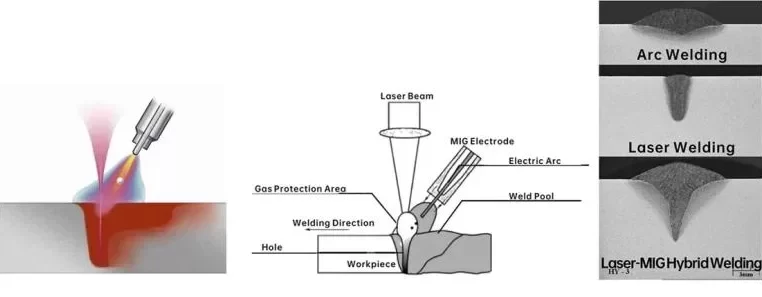
Laser welding introduces approximately one-quarter of the heat input of traditional TIG welding.
Result:
- Minimal deformation
- No correction work after welding
- Better dimensional accuracy
Higher Productivity
Compared with traditional welding:
- No back-side argon purging required
- Significantly less grinding
- Faster welding speeds
Many manufacturers achieve nearly three times the daily output of TIG welding with a single operator.
Better Corrosion Resistance
Laser welds are:
- Dense and uniform
- Free from hidden crevices
- Less likely to rust
This is particularly important for feed troughs exposed to:
- Water washing
- Feed residue
- Livestock waste
- Humid farm environments
Recommended STRION LASER Equipment
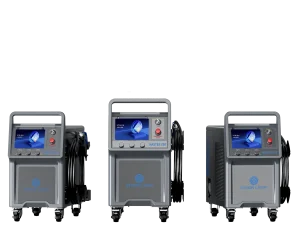
STR-HW Series Handheld Laser Welder
Ideal for light-duty feed trough production and repair work.
STR-Master Series Handheld Laser Welder
Best choice for custom fabrication and medium-volume production.
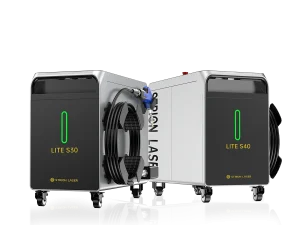
STR-LITE Series Handheld Laser Welding Machine
Portable solution for small workshops and flexible manufacturing.
STR-AW Robotic Laser Welding Workstation
Fully automated production solution for large-scale livestock equipment manufacturers.
Contact STRION LASER
📞 +028-85812068
🌐 www.strlaser-en.com
📧 str@strlaser.com