How to Reduce Laser Weld Spatter & Get Clean Welds — Practical Tips With STRION LASER Machines
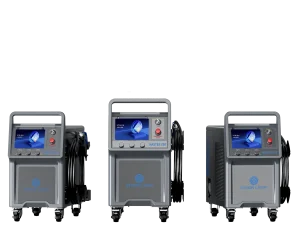
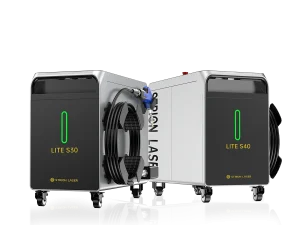
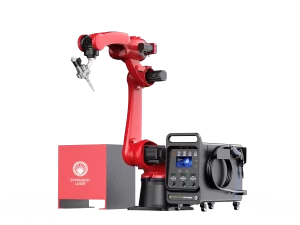
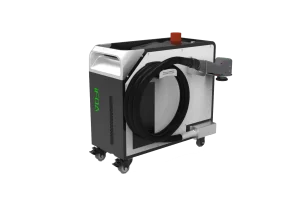
If you’ve spent hours grinding spatter off finished parts, replacing scratched protective lenses, or reworking ugly uneven weld beads, you know how costly and annoying weld spatter really is. Flying molten metal ruins workpiece surfaces, wears down torch consumables fast, slows production, and even creates safety hazards for operators. After years working on-site with fabricators, metal workshops and processing factories, we’ve summed up actionable, real-world ways to drastically cut spatter — all built around our STRION Handheld Welding Machine MASTER X and LITE S laser welding systems, with zero complicated lab jargon, just shop-proven solutions.
1. Lock Rock-Steady Laser Power Output — The Root Fix for Volatile Spatter
Most cheap handheld welders lose laser power gradually after months of use. As power drifts down unevenly, the weld pool heats inconsistently, boiling metal violently and shooting out massive spatter (you can see the contrast in our 2-year power decay chart). Our STRION LASER units fix this with built-in power compensation adaptive correction technology that no other generic handheld welder matches.
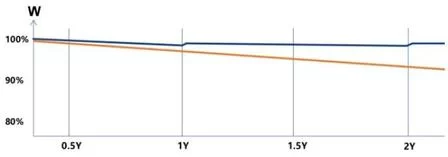
- When the machine detects actual laser power drops below your preset value, it automatically adjusts output in real time to hold power steady. Long-run power fluctuation stays under 1%, even during 8-hour nonstop shifts.
- LITE S series (S30 900W / S40 1200W) uses dual-loop direct refrigerant cooling, working reliably from -30°C to 60°C workshop temperatures. No power spikes or drops from hot summer factory floors or cold outdoor job sites — a huge win for aluminum, galvanized steel, copper, materials that spatter worst with unstable heat.
- MASTER X industrial models (X50 1500W / X60 2000W / X80 3000W) deliver consistent high power for thick plate welding, eliminating the explosive spatter you normally get when laser energy surges randomly on 5–10mm carbon steel or brass.
2. K-Series Self-Developed Handheld Welding Machine Torch: Built-In Anti-Spatter Design to Block Splash Before It Spreads
The welding torch is where most spatter mess starts, and our proprietary K-series torch is engineered specifically to fight this pain point, weighing only 390g so operators hold steady without shaky hands that worsen spatter.
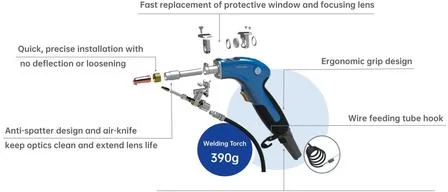
Key anti-spatter features you won’t find on standard torches:
- Air-knife anti-spatter channel: A built-in air barrier blows molten droplets away from the optical lens, stopping spatter from sticking to protective windows and focusing lenses. This keeps optics clean, avoids uneven laser transmission that triggers more spatter, and cuts lens replacement costs by half.
- Quick, lock-in optical assembly: Collimation module is pre-aligned out of the box, no tedious QBH adjustment. Shaky lens alignment distorts laser beams and creates chaotic weld pools; our fixed optics maintain uniform energy delivery every pass.
- Ergonomic lightweight grip: Fatigued operators wobble the torch, shifting wire-to-laser alignment and causing spatter. The slim, balanced grip lets you hold consistent torch angle and standoff distance all day long.
- Fast-swap nozzle & lens components: When minor spatter does build up, you swap consumables in seconds instead of pausing production for disassembly.
3. Precision Servo Wire Feeders: Stable Wire Transition = Minimal Spatter
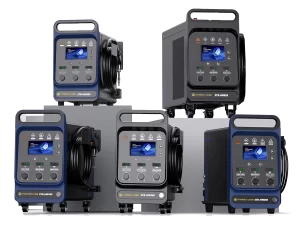
90% of fill-wire spatter comes from jerky, inconsistent wire feeding — too fast, wire doesn’t fully melt and blasts droplets everywhere; too slow, the wire burns back and creates explosive splashes. Our full line of STR wire feeders (STR-WFS-A, STR-WFD-A, STR-WF00D) eliminate feed fluctuation entirely.
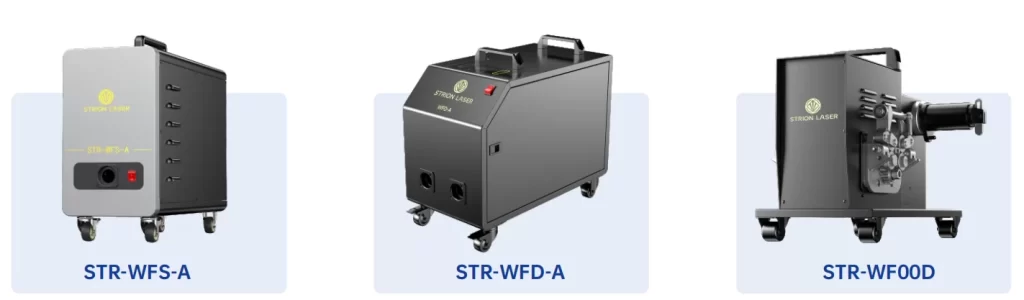
- Servo-driven closed-loop feeding maintains ultra-uniform wire speed from 20cm/min up to 600cm/min. The wire melts smoothly into the weld pool via stable liquid bridge transfer, no flying droplets.
- Multiple wire compatibility (0.8mm–2.4mm stainless, carbon, aluminum wire) with automatic/manual feed modes. For thin aluminum sheets (LITE S30 max 2mm Al), slow calibrated feed prevents over-feeding spatter; for thick carbon steel (MASTER X80 up to 10mm), high-speed consistent feed keeps the pool calm.
- Two power options: feeders can draw power directly from the laser source (no extra wall outlet clutter) or independent AC 220V for offline prep work, so feed speed never glitches mid-weld.
4. Pre-Calibrated Expert Process Libraries — Skip Trial & Error Spatter Tests
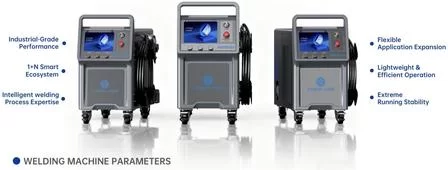
Most workshop operators waste hours tweaking power, speed, defocus, and wire feed to cut spatter, ruining dozens of test parts in the process. Every STRION LASER Handheld Welding Machine MASTER X and LITE S unit ships with 20+ pre-tuned process packages for all common materials and thicknesses, factory-calibrated to suppress spatter by design.

Real workshop examples:
- Welding 3mm stainless steel with LITE S30: One-touch preset locks 800W laser power, 120cm/min travel speed, +2mm defocus — optimized to balance heat input so the weld pool doesn’t boil over and spit metal.
- MASTER X50 (1500W) for 4mm aluminum: High beam quality paired with positive defocus settings cuts down plasma plume, the main culprit behind aluminum’s signature heavy spatter.
- If you still see light spatter after using the preset, simple micro-adjustments (5–10% lower laser power or 10–15% faster welding speed) are all you need — no massive parameter overhauls that ruin weld integrity.
5. Small Operator & Workpiece Habits That Make a Massive Spatter Difference
Our machines lay the hardware foundation, but these simple shop habits push spatter levels down to nearly zero:
- Clean raw materials thoroughly: Rust, oil, paint, or oxidation on steel, aluminum, or galvanized sheets vaporize violently under laser heat, throwing huge clouds of spatter. Pair our MASTER X-C laser cleaning module with welding to prep parts in one machine without switching equipment.
- Maintain consistent torch standoff and angle: Keep the wire tip centered in the laser beam, 1–2mm above the base metal. Tilting the torch too steep or holding it too far disrupts liquid bridge transfer and generates splashes. The K-torch’s wire feeding hook holds the wire tube fixed to avoid accidental shifting mid-weld.
- Match shielding gas flow to material: Higher reflective metals (copper, aluminum) need slightly boosted gas flow to suppress plasma cloud formation, which stirs up spatter. Our machine control panel lets you save custom gas flow values alongside each material process pack.
- Clear torch nozzles daily: Minor spatter buildup blocks shielding gas coverage and distorts laser output. The K-series quick-disassembly design lets you wipe nozzles clean in 30 seconds before each shift.
Wrap-Up: How to Reduce Laser Weld Spatter – STRION LASER’s All-Round Anti-Spatter System Saves Your Bottom Line
Excess spatter doesn’t just look bad — it adds grinding labor, raises consumable replacement costs, creates scrap parts, and slows down production lines. Instead of buying cheap welders and fighting spatter every single day, our MASTER X and LITE S series solve the problem from four core layers: stable adaptive laser power, anti-spatter engineered torch hardware, glitch-free servo wire feeding, and factory-optimized intelligent welding recipes.
STRION LASER | Expert of Lightweight Welding
Contact: +86-28 85812068 | str@strlaser.com | www.strlaser-en.com