Welding is a critical manufacturing process that involves joining materials, typically metals or thermoplastics, through the application of heat, pressure, or both. It plays a vital role in industries ranging from automotive to aerospace and construction. With the evolution of manufacturing technologies, automated welding systems have emerged as a groundbreaking advancement, significantly enhancing productivity, precision, and efficiency.
Automated welding technology, which refers to the use of robotic and computerized systems to perform welding tasks, has become increasingly important in modern production environments. This technology has not only improved the quality and consistency of welded joints but has also allowed manufacturers to streamline operations, reduce costs, and enhance worker safety.
1. What is Automated Welding System?
1.1 Definition of Automated Welding System
An automated welding system refers to a set of integrated systems where robotic or machine-based equipment carries out welding tasks, often replacing manual labor. These systems are designed to perform various welding processes such as MIG, TIG, and laser welding, often with minimal human intervention. Automated welding systems are used to create precise, repeatable welds in industrial applications.
1.2 Basic Principles and Key Components of Automated Welding System
The key components of an automated welding system typically include:
- Welding Power Supply: This provides the necessary energy to create the weld. The power supply controls parameters such as voltage, current, and wire feed speed, which are critical for ensuring high-quality welds.
- Welding Robot: A robotic arm is commonly used in automated welding systems to position the welding tool and guide it along the workpiece. The robot’s precision and repeatability ensure consistent welds.
- Sensors: Sensors, including vision systems and force sensors, monitor the welding process in real-time. These sensors provide feedback to adjust welding parameters and ensure the weld is made accurately.
- Welding Torch/Tooling: The welding torch is the device through which the welding filler material and heat are applied to the workpiece.
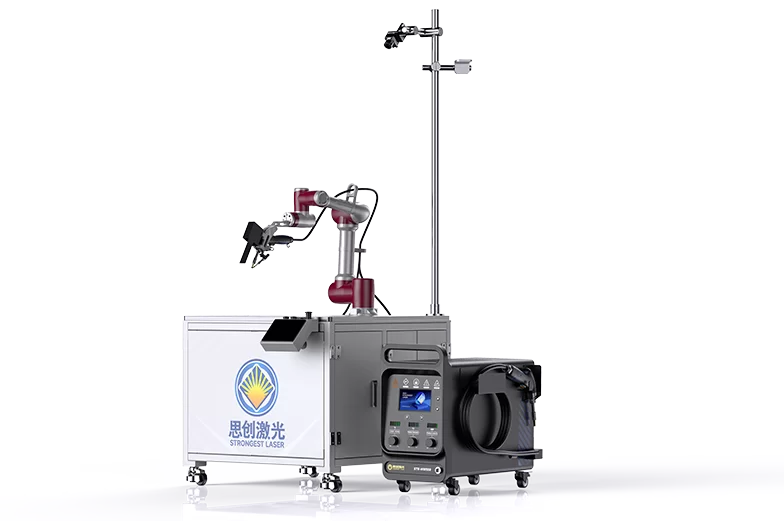
1.3 STRONGEST LASER’s Automated Welding System
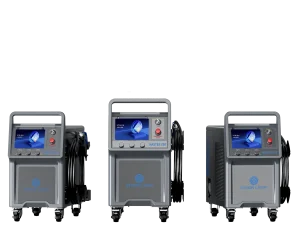
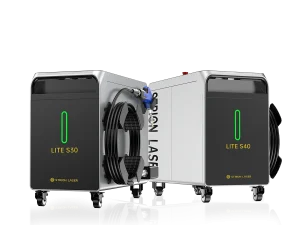
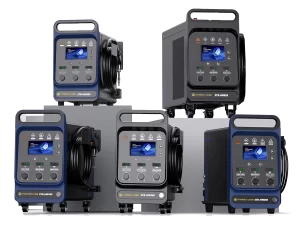
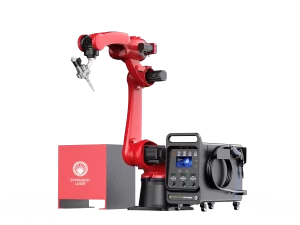
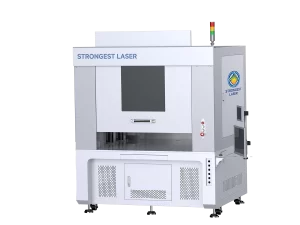
The STR-AW series of automated welding systems from STRONGEST LASER is designed to integrate seamlessly with both collaborative robots and industrial robots from various brands. This compatibility ensures the consistency and stability of the welding process, while providing flexibility in choosing robotic platforms. The STR-AW series offers the unique advantage of unlimited process expansion, making it suitable for a wide range of welding tasks, and improving work efficiency. This system is particularly notable for its advanced control capabilities, which allow precise adjustments in real-time to meet the exacting standards of modern manufacturing.
2.Types of Automated Welding
There are many types of automated welding, including but not limited to the following:
Automated spot welding: Spot welding is a welding process in which an electrode focuses an electric current onto the welding material at a specific point, causing the material to melt and form a weld. This welding process is often used to manufacture automobile bodies and other metal structures. Automated spot welding is often used in high-speed production and large-scale manufacturing.
Automated laser welding: Laser welding uses a laser beam to generate heat. Laser welding has high precision and high efficiency, and is suitable for welding thin materials and high precision requirements. Automated laser welding is often used in industries such as automotive, electronics, and aerospace.
Automated TIG welding (Tungsten Inert Gas): TIG welding is a shielded welding process that uses a pure tungsten electrode and an inert gas (such as argon). TIG welding is suitable for a variety of materials, including aluminum, stainless steel, and alloys. Automated TIG welding is often used for welding tasks that require high quality and fineness.
Automated MIG/MAG welding (Metal Inert Gas/Metal Active Gas): A consumable electrode welding process that uses a shielding gas (usually an inert gas). MIG and MAG welding are suitable for a variety of metal materials, including steel, aluminum, and copper. Automated MIG/MAG welding is widely used in large-scale production in the manufacturing industry.
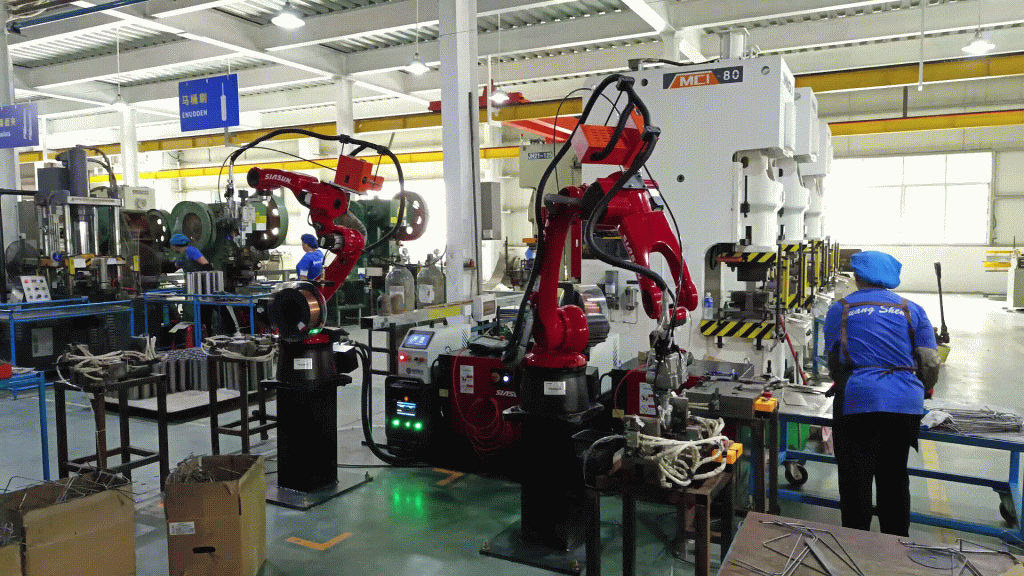
Robotic welding: An automated welding process that uses industrial robots to perform welding tasks. Robotic welding allows for efficient, precise and reliable welding in a variety of industries, including automotive, shipbuilding, construction and aerospace.
3. Application Scenarios of Automated Welding Systems
Automated welding systems are used across a variety of industries to perform welding tasks more efficiently and with higher precision. Some of the key application scenarios include:
Collaborative Robot Welding: Collaborative robots (cobots) are designed to work safely alongside human operators. In welding, cobots can be used to perform repetitive tasks like seam tracking and component positioning, freeing up human workers for more complex operations.
Industrial Automated Laser Welding: Laser welding, which uses focused laser beams to melt and join materials, has gained popularity in industries requiring high precision. Automated laser welding systems are used in high-volume manufacturing environments, such as electronics assembly or automotive production.
Automatic Welding of Automotive Parts: Automated welding systems are essential in the automotive industry, where they are used to weld complex components such as body panels, frames, and exhaust systems. The precision and speed of automation are vital for meeting the high demands of automotive production lines.
Automatic Welding of Industrial Robots: Welding robots are used to join heavy-duty materials in industries like construction and shipbuilding. These robots can perform high-quality welds on large parts that would be difficult or unsafe for human workers to handle.
Other Application Scenarios: Automated welding systems are also used in areas like aerospace, shipbuilding, and the manufacturing of consumer electronics, where quality, precision, and speed are paramount.

4.Advantages of Automated Welding Systems
4.1 Improve Production Efficiency
Automated welding systems operate continuously and can complete tasks much faster than manual labor. By reducing the time required to perform each weld, manufacturers can increase their output, ensuring quicker turnaround times.
4.2 Improve Welding Quality
Automated systems are known for their precision. Robots follow pre-programmed paths, ensuring consistency in each weld, reducing human error, and improving the overall quality of the finished product. This consistency is especially important in industries where safety and performance are critical, such as aerospace and automotive manufacturing.
4.3 Reduce Production Costs
Although the initial investment in automated welding systems can be high, the long-term savings are significant. Automation reduces labor costs, minimizes material waste, and helps manufacturers produce more products in less time, ultimately leading to reduced production costs.
4.4 Improve Working Environment and Reduce Labor Intensity of Workers
Automated welding systems take over dangerous, repetitive tasks that would otherwise expose human workers to heat, fumes, and physical strain. This not only improves the working conditions but also enhances worker safety, reducing the likelihood of accidents or injuries.
4.5 Achieve Precise Control and Improve Process Stability
Automated systems provide precise control over welding parameters, such as heat, speed, and material flow. This leads to better process stability and minimizes variations in weld quality, which is crucial for industries that require high levels of reliability and safety.
5. Development Trends and Challenges of Automated Welding Technology
5.1 Development Trends
The future of automated welding technology is characterized by several key trends:
- Intelligence and Automation: The integration of artificial intelligence (AI) allows automated systems to learn and adapt, improving their ability to detect defects and optimize the welding process.
- Digitization: The use of digital twins, data analytics, and cloud computing allows for real-time monitoring and optimization of the welding process, leading to smarter operations.
- Remote Monitoring and Control: Advances in wireless communication and IoT enable operators to monitor and control welding systems from remote locations, improving flexibility and reducing downtime.
5.2 Current Challenges
Despite its advantages, automated welding technology faces several challenges:
- Technology Updates: As welding technology continues to evolve, systems must be regularly updated to keep pace with new materials and welding techniques.
- Talent Training: The complexity of automated welding systems requires highly skilled personnel for setup, maintenance, and operation. Companies must invest in training programs to ensure their workforce is equipped with the necessary expertise.
- Equipment Costs: The high initial cost of automated welding systems remains a barrier for some companies, particularly small and medium-sized enterprises. Overcoming these cost challenges will be essential for broader adoption.

In conclusion, automated welding systems are revolutionizing the manufacturing industry by offering increased efficiency, improved quality, and cost savings. The widespread adoption of these systems is transforming industries such as automotive, aerospace, and electronics, where high-precision welding is crucial. As technology continues to advance, the future of automated welding looks promising, with innovations such as AI, digitization, and remote monitoring further enhancing capabilities. However, overcoming challenges like technology updates, talent training, and equipment costs will be key to the continued growth and success of automated welding systems in the global market.