Direct-Refrigerant vs Water Cooling in Laser Welding: A 5-Year Cost Comparison
Why Cooling Systems Define Long-Term Laser Welding Costs
As laser welding machines increasingly become core production equipment rather than auxiliary tools, their true cost is no longer defined by the purchase price alone. Over a service life of five years or more, operating stability, maintenance frequency, and energy consumption often outweigh the initial investment.
Among these factors, the cooling system plays a decisive role. While water-cooled systems have long been the industry standard, direct-refrigerant cooling has emerged as an alternative that fundamentally changes the long-term cost structure of laser welding equipment. Understanding the differences between these two approaches is essential for making rational, future-oriented equipment decisions.
Water-Cooling Systems: The Hidden Cost Driver Behind Frequent Maintenance
Water-cooling systems are widely used due to their mature supply chain and relatively low upfront cost. However, their long-term reliability and operating expenses reveal several structural weaknesses.
❌️Leakage and Scaling Risks in Water-Cooled Laser Welders
A water-cooling system relies on pumps, pipelines, connectors, filters, and continuous liquid circulation. Over extended operation, aging seals, vibration, and thermal cycling increase the risk of coolant leakage. Even minor leaks can threaten sensitive optical and electronic components inside the laser source.
At the same time, mineral deposits gradually accumulate inside pipes and heat exchangers. Similar to plaque buildup in blood vessels, scaling restricts flow and reduces heat dissipation efficiency, leading to rising operating temperatures and hidden stability risks.
❌️Seasonal Limitations and Cold-Weather Preheating Issues
Water-cooled systems are highly sensitive to ambient temperature. In hot environments, cooling efficiency declines and overheating alarms become more frequent, directly interrupting production. In cold climates, antifreeze must be added or replaced regularly to prevent freezing damage.
Additionally, cold starts often require extended preheating to bring the coolant to optimal pump operating temperature. This process consumes extra energy and delays production startup, particularly in winter conditions.
❌️Recurring Consumables and Maintenance Requirements
Unlike sealed systems, water cooling involves continuous consumable costs. Coolant, antifreeze, and filter elements require regular replacement to maintain basic performance. Pipes, condensers, and tanks also need periodic professional cleaning.
These are not one-time expenses but fixed, recurring costs that persist throughout the entire equipment lifecycle, steadily increasing total operating expenditure.
Direct-Refrigerant Cooling: Eliminating Traditional System Limitations
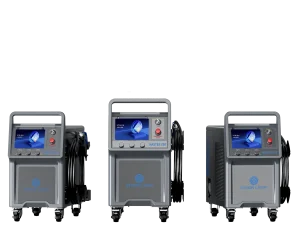
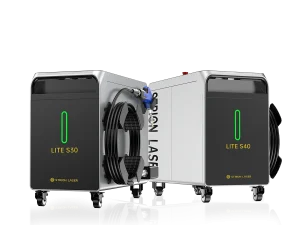
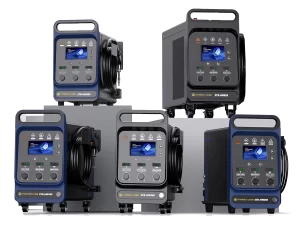
To address the inherent drawbacks of water cooling, modern direct-refrigerant systems adopt a fundamentally different thermal management logic. Instead of transferring heat through multiple media, refrigerant directly absorbs heat at the source.
✅️ Zero-Consumable Cooling Architecture
Direct-refrigerant systems use a fully sealed cooling circuit. There is no coolant or antifreeze to replace, and no filters or pumps associated with water circulation. Once installed, the system operates without routine consumable replacement, significantly reducing long-term maintenance workload.
✅️ Direct Heat Exchange and Energy Efficiency Advantages
Refrigerant evaporates directly at heat-generating components, enabling extremely short heat transfer paths. This direct exchange is far more efficient than the “water-to-refrigerant” secondary heat transfer used in water-cooled systems.
Combined with intelligent variable-frequency control, the system delivers cooling only when needed, avoiding unnecessary energy consumption and improving overall efficiency.
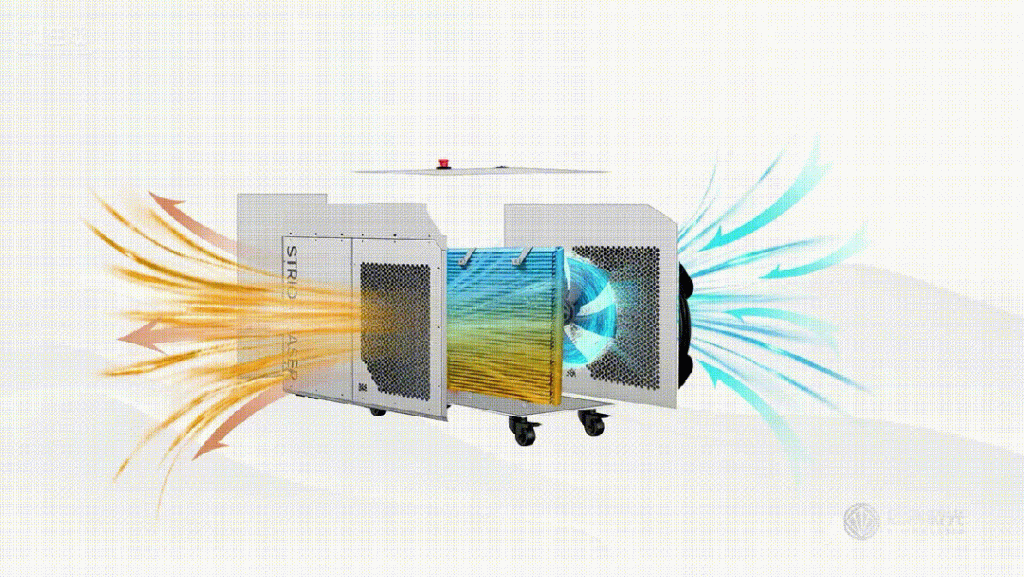
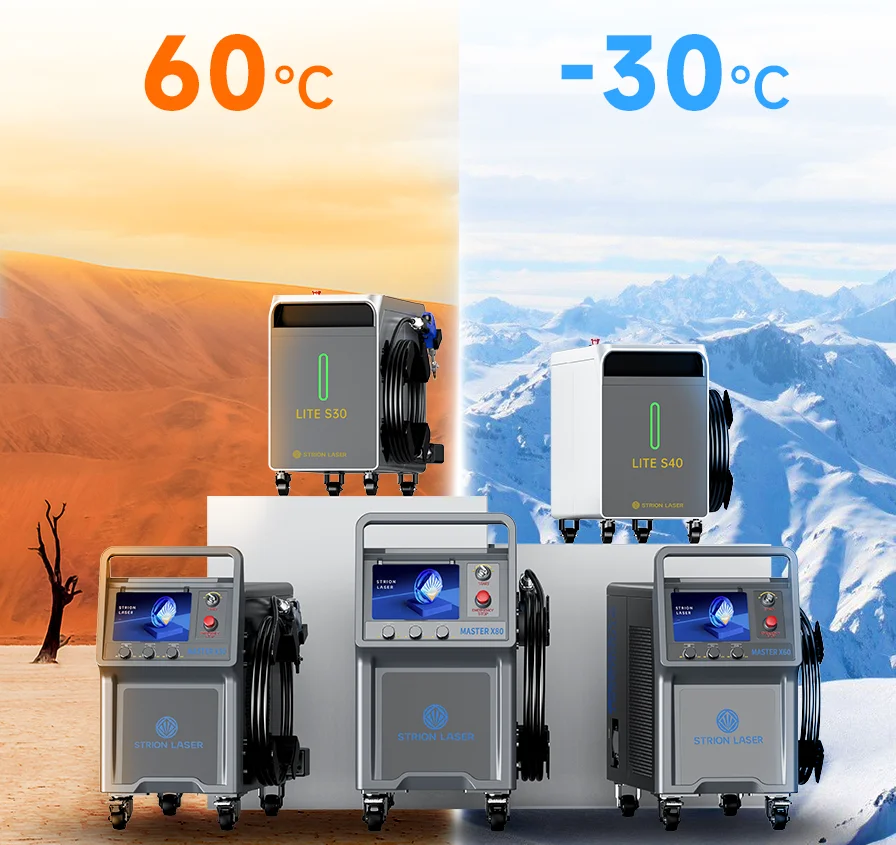
✅️ All-Weather Operation from –30°C to 60°C
Direct-refrigerant cooling maintains stable performance across a wide temperature range, from severe cold to high-heat industrial environments. Fast startup, consistent output, and stable thermal control help prevent overheating alarms and unplanned downtime caused by environmental conditions.
Five-Year Cost Comparison Based on a 3 kW Laser Welding Machine
To clearly illustrate the economic impact of cooling system selection, consider a typical 3 kW laser welding machine operating under standard usage conditions over a five-year lifecycle.
| Cost Item | Water-Cooling System | Direct Refrigerant Cooling System |
| Consumable Costs | ||
| Coolant | RMB 1,800 | RMB 0 |
| Antifreeze | RMB 2,700 | RMB 0 |
| Filter Elements | RMB 3,600 | RMB 0 |
| Scheduled Maintenance Costs | ||
| System Cleaning & Maintenance | RMB 6,000 | RMB 0 |
| Energy Consumption Costs | ||
| Equipment Operating Electricity | RMB 48,000 | RMB 24,000 |
| Winter Preheating Electricity | RMB 460 | RMB 0 |
| Total Operating Cost (Full Life Cycle) | RMB 62,560 | RMB 24,000 |
| Total Savings Over 5 Years | RMB 38,560 | |
Consumables Costs: Coolant, Antifreeze, and Filters
A common water-cooled 3 kW system uses a tank capacity of approximately 20 liters.
- Coolant must be replaced monthly to maintain cleanliness and heat transfer efficiency, resulting in an estimated five-year cost of approximately ¥1,800.
- Antifreeze, required for winter operation, adds roughly ¥2,700 over five years.
- Filters, typically replaced monthly, contribute an additional ¥3,600 over the same period.
Direct-refrigerant systems eliminate these consumables entirely.
System Cleaning and Preventive Maintenance Costs
To maintain effective heat dissipation, water-cooled systems require regular professional cleaning of pipelines and condensers. Over five years, these scheduled maintenance services can accumulate to approximately ¥6,000.
Sealed refrigerant systems largely avoid this category of expense.
Energy Consumption and Winter Preheating Costs
Typical water-cooling units consume around 4 kWh per hour, while direct-refrigerant systems consume approximately 2 kWh per hour under comparable operating conditions. Over five years, this difference alone can result in electricity cost savings of roughly ¥24,000.
In addition, winter preheating of water-cooled systems generates further energy consumption, estimated at around ¥460 over five years.
What This Means for Long-Term Laser Welding Investment Decisions
When evaluated over a five-year operating horizon, direct-refrigerant cooling demonstrates a clear advantage in total cost of ownership. Reduced energy consumption, minimal maintenance, elimination of consumables, and improved environmental adaptability translate into tangible, measurable savings.
More importantly, this is not merely a technical upgrade—it represents a strategic shift toward predictable operating costs and higher production reliability. For manufacturers seeking long-term stability rather than short-term savings, cooling system selection becomes a critical part of equipment investment planning.
Choosing the right thermal management approach today can define not only operating expenses, but also production continuity and competitiveness in the years ahead.
Contact STRION LASER
📞 +028-85812068
🌐 www.strlaser-en.com
📧 str@strlaser.com