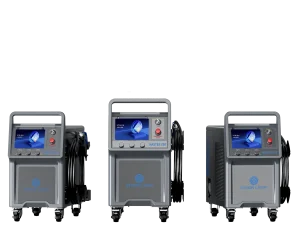
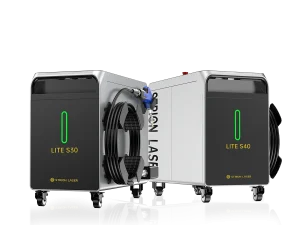
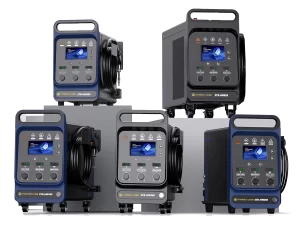
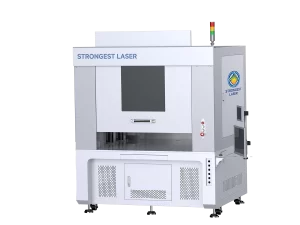
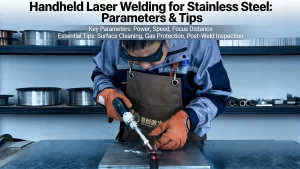
Some operators want to remove the interlock, but such welding operation is a very dangerous behavior – especially when using handheld laser welding machines or fiber laser welding systems.
Unexpected LASER Output
The laser welder (including handheld metal laser welding machines) is protected by an interlocking circuit, and the welder must ensure that certain conditions are met before the LASER can be produced:
Contact between the welding torch and the workpiece
The interlock line is in direct or indirect contact with the workpiece
Laser Protective Glass
For all laser welding equipment including fiber laser welding machines, select the appropriate protection level according to the laser wavelength to ensure that the specific wavelength of the laser can be filtered (e.g., Nd:YAG laser requires protective glasses with a wavelength of 800-1100 nm, OD6 at least).
Protective Gloves and Clothing
When operating handheld laser welding machines, select the appropriate protection level according to the laser wavelength to ensure that the specific wavelength of the laser can be filtered (e.g., Nd:YAG laser requires protective glasses with a wavelength of 800-1100nm).
Reflective Hazards
For both stationary and handheld metal laser welding machines, laser reflection can focus on the retina, causing thermal or photochemical damage that cannot be avoided by the human eye in time with the blink reflex.
Processing:
When using fiber laser welding machines, apply matte treatment (e.g. sandblasting, coating) on the surface of the workpiece to convert specular reflection into diffuse reflection.
Materials:
Particularly important for handheld laser welding applications – avoid using highly reflective materials (e.g., pure copper, mirror stainless steel) as fixtures.
| Material | Reflective rate |
| Ag | 90%~95% |
| Al | 85%~92% |
| Cu | Visible light 80%~85%,infrared 90%+ |
Hazardous Gases
When using handheld metal laser welding machines for plated metal welding (e.g. galvanized sheet), be aware of zinc oxide fumes produced by the high-temperature evaporation of the zinc coating.