Fire Extinguisher Cylinder Welding: Process Requirements and Practical Laser Welding Solution
1.Material Characteristics of Fire Extinguisher Cylinders
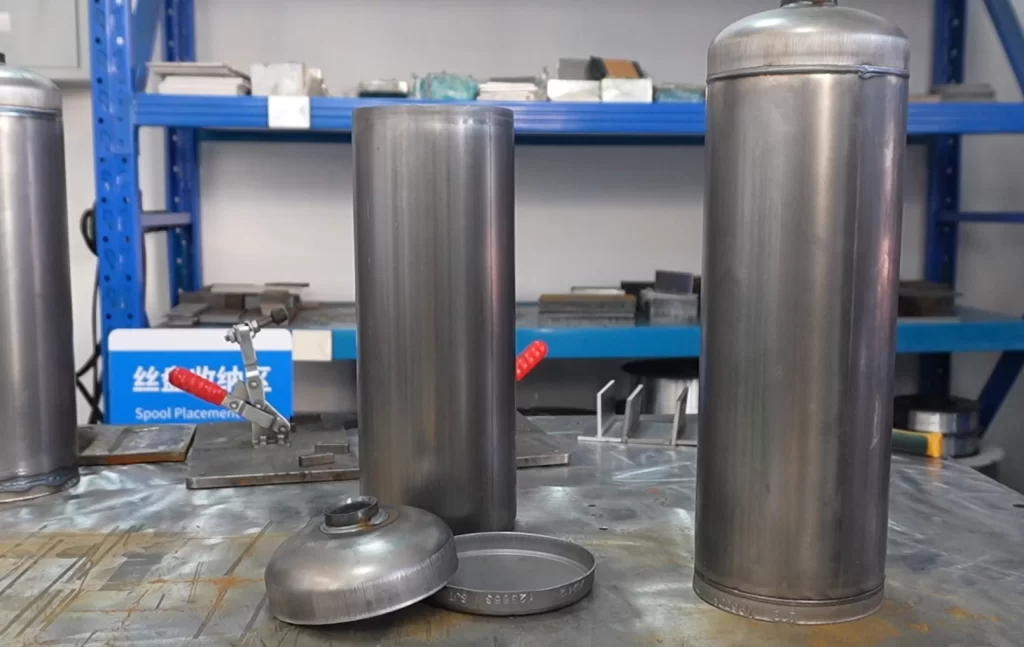
Fire extinguisher cylinders are typically manufactured from carbon steel, most commonly low-carbon steel, due to its favorable balance between strength, toughness, and weldability. In this application, the cylinder wall thickness is generally around 1.2 mm, placing high demands on welding precision and process stability.
Based on carbon content, carbon steel is classified into three categories:
- Low-carbon steel: ≤ 0.25% carbon
- Medium-carbon steel: 0.25%–0.6% carbon
- High-carbon steel: > 0.6% carbon
As carbon content increases, tensile strength and yield strength improve, while ductility and low-temperature toughness decrease. Low-carbon steel offers better toughness and lower cracking sensitivity, making it the preferred material for pressure vessels such as fire extinguisher cylinders.
2.Welding Requirements for Pressure Vessel Safety
Fire extinguisher cylinders are classified as pressure-bearing components, which places strict requirements on weld quality. The weld seam must be smooth and uniform, ensuring both airtightness and structural strength.
Key performance requirements include:
- High sealing performance to prevent gas leakage
- Stable mechanical strength under internal pressure
- Consistent weld quality suitable for mass production
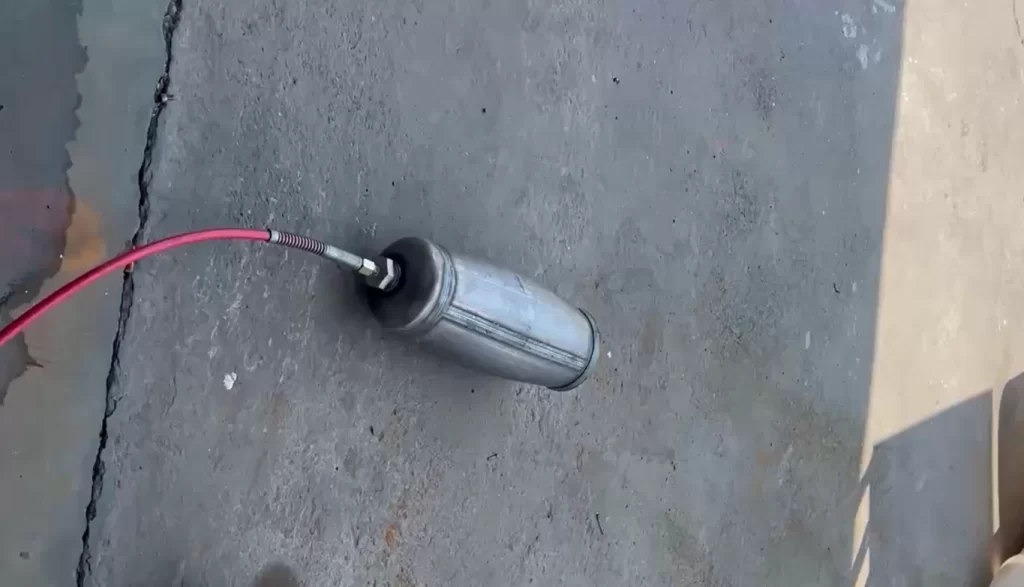
During testing, cylinders are continuously pressurized up to 7.0 MPa, at which point the cylinder body may rupture, but the weld seam must remain intact without cracking.
3.Pressure and Fatigue Testing Standards
In addition to static pressure testing, fire extinguisher cylinders must pass pressure cycling (fatigue) tests. According to current standards:
- Pressure is increased to 2.1 MPa and then released to 0 MPa
- The cycle is repeated 5,000 times under the new national standard
In on-site testing conditions, cycles may be limited to around 1,100 repetitions, while traditional MIG welding processes typically achieve 2,000–3,000 cycles before failure. This highlights the importance of improved welding consistency and reduced heat-affected zones.
4.Laser Welding Process for Fire Extinguisher Cylinders
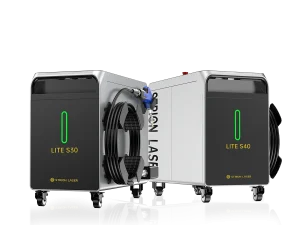
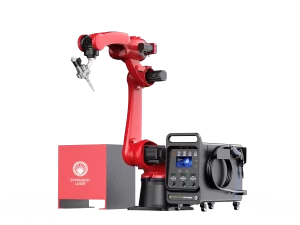
To meet these stringent requirements, a handheld laser welding solution provides clear advantages in heat control, weld consistency, and production efficiency.
In this application, the welding process is divided into two sections:
- Top cap welding: autogenous welding (no filler wire)
- Bottom base welding: filler wire welding for enhanced joint strength
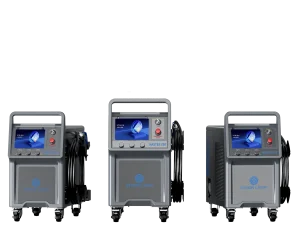
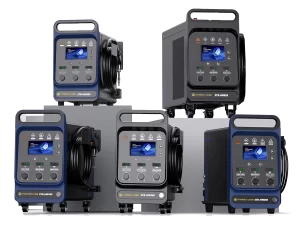
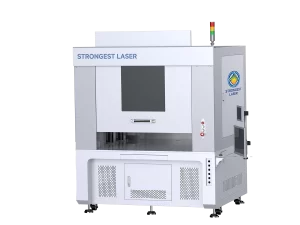
The equipment used is the STR-HW550 Pro handheld laser welding machine, designed for thin-walled carbon steel pressure components.
5. Laser Welding Parameters (Reference)
Top Cap Welding Parameters (Autogenous Welding)
- Power: 100%
- Frequency: 50 Hz
- Weld width: 4.0
- Duty cycle: 100%
- Pulse frequency: 2000 Hz
Bottom Base Welding Parameters (Wire Feeding)
- Power: 100%
- Frequency: 50 Hz
- Weld width: 3.5
- Duty cycle: 100%
- Pulse frequency: 2000 Hz
- Wire feeding speed: 55 cm/min
Under optimized conditions, the fastest production cycle reaches 18 seconds per cylinder. For higher takt-time requirements, higher-power models such as the 850 W series can be considered.
6.Weld Quality and Production Benefits
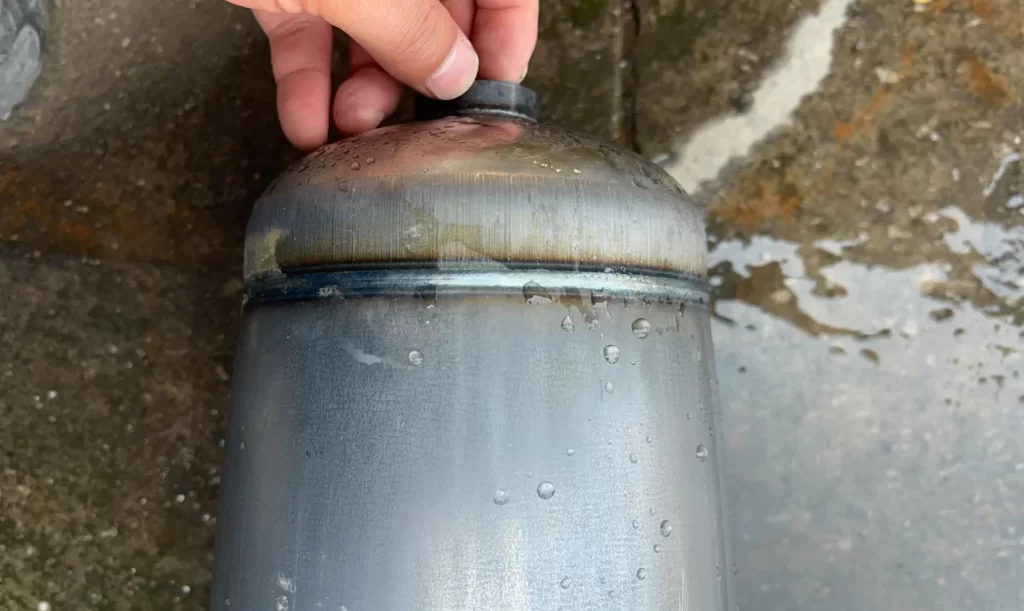
Laser welding produces clean, uniform weld seams with minimal spatter and a narrow heat-affected zone. Compared with conventional arc welding methods, laser welding reduces thermal deformation and improves fatigue performance—key factors in pressure cycling tests.
For manufacturers of fire extinguisher cylinders, this translates into:
- Improved pressure and fatigue test pass rates
- More consistent weld quality across batches
- Reduced post-weld rework and finishing
- Higher production efficiency with stable takt time
7.Conclusion
Fire extinguisher cylinder welding is a typical example of thin-walled pressure vessel fabrication, where material properties, weld integrity, and fatigue performance must all be carefully balanced. By applying a well-controlled laser welding process and appropriate parameter settings, manufacturers can achieve stronger, more reliable welds while improving production efficiency.
As safety standards continue to evolve, laser welding is becoming an increasingly practical solution for pressure vessel applications that demand both precision and long-term reliability.
Contact STRION LASER
📞 +028-85812068
🌐 www.strlaser-en.com
📧 str@strlaser.com