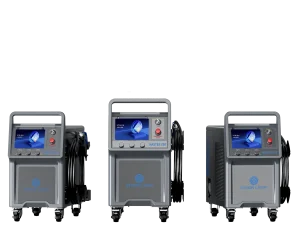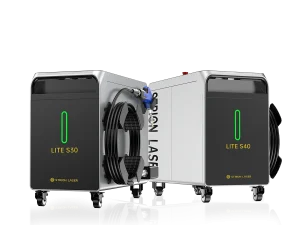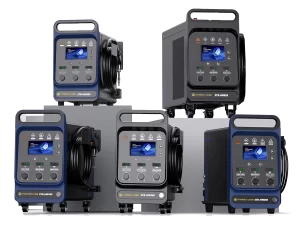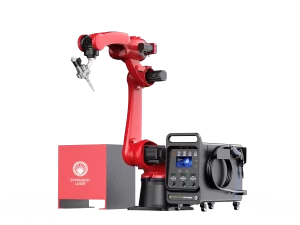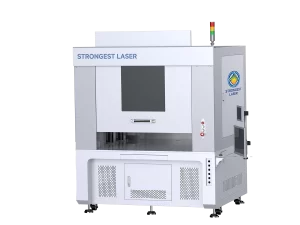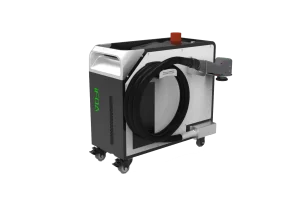
When choosing between fiber lasers and CO2 lasers, you need to consider key factors like material type, efficiency, and cost. Fiber lasers excel in cutting metals with speed and precision, while CO2 lasers handle non-metals like wood and acrylic effectively. Fiber lasers consume about 30% less power and offer a longer lifespan, making them ideal for high production volumes. On the other hand, CO2 lasers are more affordable upfront and suit low to medium production needs. Understanding the difference between co2 laser and fiber laser helps you select the right tool for your specific tasks.
1. Material Compatibility
Fiber Laser Applications
Fiber lasers work best with metals and certain plastics. You can use them to cut or engrave materials like:
- Carbon steel
- Stainless steel
- Copper
- Brass
- Aluminum
- Titanium
These lasers also handle metal sheets, pipes, and even aluminum cans or bottles. They are ideal for rigid and flexible plastic materials, including PVC pipes and shrinkwrap. However, fiber laser working with thick materials and highly reflective surfaces can be challenging. Cutting wood or other flammable materials can also pose safety risks, as the laser’s efficiency may be reduced on certain materials.
CO2 Laser Applications
CO2 lasers excel in cutting and engraving non-metal materials. They are highly effective for:
- Wood and plywood
- Acrylic and plastic
- Leather and fabric
- Glass and ceramics
- Stone and marble
- Carbon fiber and fiberglass
- Laminate
These lasers absorb energy well in these materials, allowing for clean cuts and detailed engravings. You can use CO2 lasers for intricate designs on wood, precise shaping of acrylic, or even engraving logos on glass. Their versatility makes them a popular choice for creative and industrial applications.
Examples of Common Uses
Fiber lasers are widely used in industries like electronics, automotive, and medical manufacturing. For example:
| Industry | Application Description |
| Electronics and Semiconductors | Precision manufacturing for microscopic components. |
| Automotive, Aerospace, and Marine | Cutting and welding for advanced machinery, including titanium aircraft skins. |
| Medical Industry | High-precision manufacturing for medical equipment. |
CO2 lasers, on the other hand, are common in signage, packaging, and crafts. For instance:
| Industry | Application |
| Signage | Cutting and engraving signage |
| Packaging | Cutting packaging materials |
| Automotive | Manufacturing parts and components |
| Crafts | Engraving and cutting for crafts |
You might also find CO2 lasers used for perforating dashboards in cars or engraving barcodes on products. Their ability to process organic materials like wood and textiles makes them a favorite in the clothing and furniture industries.
2. Efficiency and Maintenance
Energy Efficiency
When it comes to energy efficiency, fiber lasers outperform CO2 lasers significantly. Their power conversion rate ranges from 30% to 50%, while CO2 lasers only achieve 10% to 15%. This means fiber lasers consume up to 50% less energy. For example:
| Laser Type | Power Conversion Rate | Energy Consumption |
| Fiber Laser | 30-50% | Up to 50% less |
| CO2 Laser | 10-15% | Higher consumption |
In industrial settings, CO2 lasers can consume approximately 70 kW at maximum power. In contrast, fiber lasers use only 18 kW at peak performance. Even entry-level fiber lasers (1000W to 2000W) consume just 12-15 kW when active. This efficiency not only reduces electricity costs but also minimizes environmental impact.
Maintenance Needs
Fiber lasers require minimal maintenance due to their solid-state design. They lack moving parts, gas refills, and mirrors, which are essential in CO2 lasers. This simplicity eliminates the need for regular cleaning or replacement of components. You’ll only need to maintain protective windows, which costs around $200 to $400 annually.
CO2 lasers, on the other hand, demand more upkeep. They rely on mirrors, lenses, and vacuum pumps, all of which require frequent cleaning and replacement. Maintenance costs can range from $1,000 to $2,000 annually. Additionally, CO2 lasers need gas refills, which can cost $200 to $500 per month.
| Laser Type | Maintenance Costs (Annual) | Additional Notes |
| Fiber Laser | $200 – $400 | Minimal maintenance, mainly for protective windows. |
| CO2 Laser | $1,000 – $2,000 | Requires regular cleaning/replacement of mirrors and lenses. |
Lifespan and Durability
Fiber lasers have a much longer lifespan compared to CO2 lasers. They can last up to 100,000 hours, while CO2 lasers typically last between 2,000 and 10,000 hours. This extended lifespan reduces the need for frequent replacements, saving you money in the long run.
The durability of fiber lasers also stems from their robust design. Their sealed components and lack of gas refills contribute to a higher mean time between failures (MTBF). In contrast, CO2 lasers require more frequent servicing due to their complex systems. If you’re looking for a long-term solution, fiber lasers offer unmatched reliability and cost-effectiveness.
3. Cost-Effectiveness
Upfront Costs
When comparing upfront costs, fiber lasers require a larger initial investment than CO2 lasers. Entry-level fiber lasers start at $10,000 and can exceed $1 million for industrial-grade models. In contrast, CO2 lasers are more affordable, with prices ranging from $2,000 for basic models to $80,000 for high-quality systems.
| Cost Factor | CO2 Laser | Fiber Laser |
| Entry-Level Cost | $2,000 – $5,000 | $10,000 – $15,000 |
| Mid-Range Cost | $5,000 – $15,000 | $20,000 – $50,000 |
| Industrial Grade | $15,000 – $30,000 | $50,000 – $150,000 |
If your budget is tight, a CO2 laser might be the better choice. However, if you need advanced capabilities and higher precision, the higher upfront cost of a fiber laser could be worth it.
Operating Costs
Fiber lasers are more energy-efficient, operating at 30-40% efficiency compared to the 10-15% efficiency of CO2 lasers. This translates to lower electricity bills. For instance, fiber lasers consume about 18 kW at peak performance, while CO2 lasers use up to 70 kW. Additionally, fiber lasers eliminate the need for consumables like gas refills, which CO2 lasers require monthly. These refills can cost $200 to $500 per month, adding up to thousands annually.
| Operating Cost Factor | CO2 Laser | Fiber Laser |
| Energy Consumption | Higher | Lower |
| Gas Refills | Required | Not Needed |
| Maintenance Costs | Higher | Minimal |
By choosing a fiber laser, you save on both energy and maintenance costs over time.
Long-Term Value
Fiber lasers offer better long-term value due to their durability and efficiency. They last up to 100,000 hours, far surpassing the 2,000 to 10,000-hour lifespan of CO2 lasers. Their solid-state design reduces maintenance frequency and eliminates the need for gas-filled tubes or moving parts. This reliability ensures fewer interruptions and higher productivity.
Fiber lasers also deliver faster cutting speeds and higher precision. For example, they achieve cutting speeds of up to 1,417 inches per minute (IPM), compared to 260 IPM for CO2 lasers. This speed, combined with lower energy consumption, makes fiber lasers a cost-effective choice for businesses focused on long-term savings and output.
| Performance Factor | CO2 Laser | Fiber Laser |
| Cutting Speed (IPM) | 260 | 1,417 |
| Energy Efficiency | ~30% | ~70% |
| Maintenance Frequency | Monthly | Quarterly |
If you prioritize efficiency, durability, and reduced operating costs, a fiber laser provides unmatched value over time.
Choosing between a fiber laser and a CO2 laser depends on your specific needs. Fiber lasers excel in metal cutting due to their speed and precision. They can cut thin metal sheets at speeds of up to 20 meters per minute, with tight tolerances and minimal material waste. CO2 lasers, however, shine in non-metal applications like wood and acrylic. They handle intricate designs, cut thicker materials, and produce smooth edges that require no extra finishing. Consider factors like material type, thickness, and budget to determine the best option for your tasks.
FAQ
1. Can a fiber laser cut non-metal materials like wood or acrylic?
Fiber lasers are not ideal for cutting non-metal materials. They struggle with wood, acrylic, and other organic materials due to their wavelength. CO2 lasers handle these materials better, producing cleaner cuts and smoother edges.
2. Which laser is better for engraving intricate designs?
CO2 lasers excel at engraving intricate designs on non-metals like wood, glass, and acrylic. Their precision and ability to handle delicate materials make them perfect for detailed work. Fiber lasers are better suited for engraving metals.
3. How do I decide between a fiber laser and a CO2 laser?
Consider the materials you work with and your budget. Fiber lasers are best for metals and long-term efficiency. CO2 lasers are better for non-metals and have lower upfront costs. Match the laser to your specific needs.
4. Are fiber lasers more environmentally friendly than CO2 lasers?
Yes, fiber lasers consume less energy and require no consumables like gas refills. This reduces their environmental impact compared to CO2 lasers, which use more power and need regular gas replacements.
5. What is the lifespan difference between fiber and CO2 lasers?
Fiber lasers last up to 100,000 hours, while CO2 lasers typically last between 2,000 and 10,000 hours. Fiber lasers offer greater durability and require less frequent replacements, making them a better long-term investment.