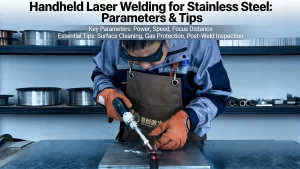
Weld pool instability in laser welding refers to the abnormal dynamic behavior of the weld pool (liquid metal area) during the welding process, which is manifested as keyhole oscillation, uncontrolled sparks, penetration depth fluctuation or irregular weld molding. Specifically, it can be divided into the following core reasons:
Mismatch of process parameters
1.Abnormal energy input
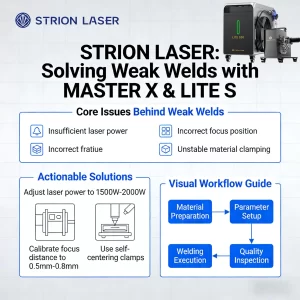
When the laser power density exceeds the critical value but is not stably maintained, the keyhole of the molten pool is frequently opened and closed, resulting in the random generation or disappearance of plasma, and the wave pattern of alternating width and narrowness of the weld appears. For example, a mismatch between welding speed and power (too fast or too slow) can directly exacerbate the dynamic imbalance.
2.Focus position offset
When the focused spot deviates from the optimal working distance, the energy density distribution is uneven, and the depth of the keyhole in the molten pool changes drastically, and an unstable mode of alternating heat conduction welding and deep penetration welding may occur.
Material and surface condition
1.Contaminant interference
When oil, oxide or moisture remains in the welding area, the volatile substances vaporize rapidly at high temperatures, forming bubbles and bursting, causing the molten pool to oscillate and splash, resulting in abnormal closure of the keyhole or explosion.
2.Highly reflective material properties
Metals such as aluminum and copper have a high reflectivity to laser light, requiring a higher power density to maintain a stable keyhole. If the energy input is insufficient or fluctuating, it is easy to collapse the melt pool or keyhole, forming intermittent welds.