Thermal effects dominate the cleaning mechanism
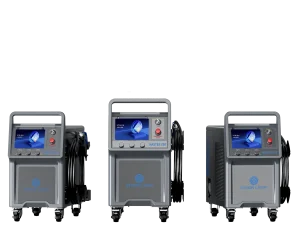
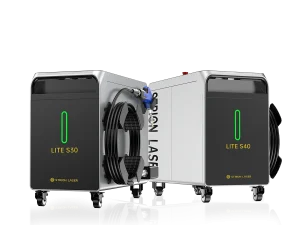
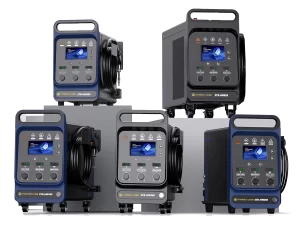
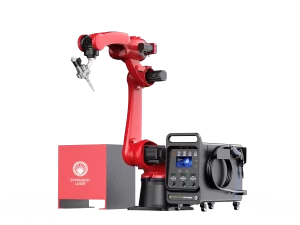
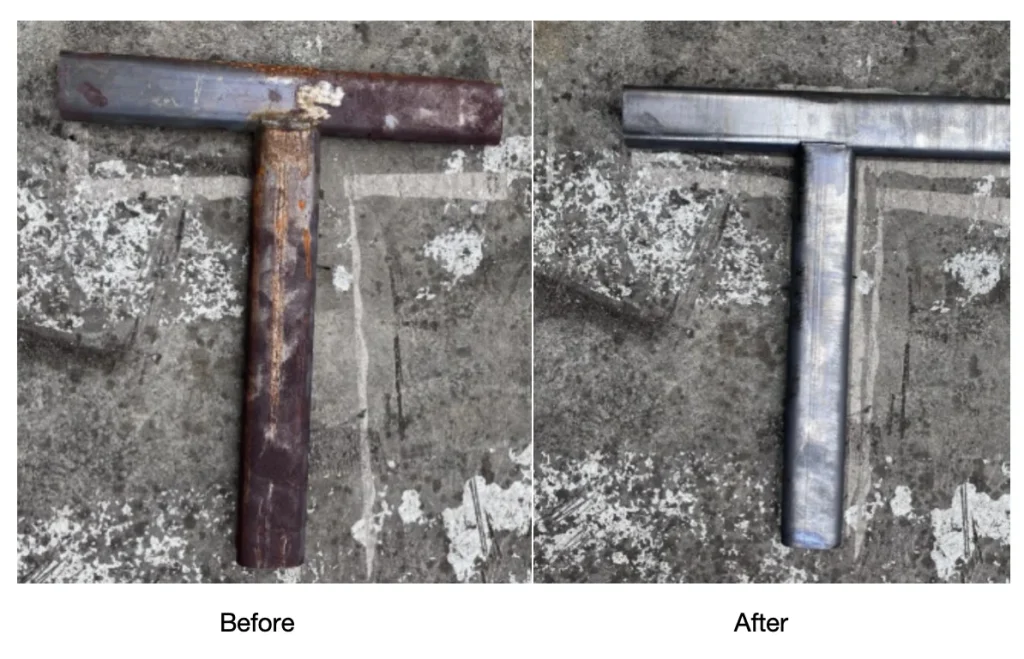
CW lasers continuously act on the surface of the material through a high-power laser beam (typically ≥ 1000W) with a steady output, and use thermal effects to evaporate or ablate dirt (e.g., rust layers, coatings) for rapid removal. Its energy distribution is uniform, making it suitable for covering a wide area.
High power and large processing area adaptability
The power of the continuous laser cleaning machine is generally in the range of 1000-3000W, and it can clean the floating rust or steel structure on the metal surface at a speed of up to 22 square meters/hour, which is especially suitable for scenarios with high tolerance for substrate damage.
Balance between low cost and high efficiency
Compared with pulsed equipment, the purchase cost of continuous laser cleaning machine is reduced by more than 30%, and the energy consumption control is better, and the cost performance is outstanding in shipbuilding, rail transit and other fields that require large-scale rust removal.
| Contrast Dimensions | Continuous laser cleaning | Pulsed laser cleaning |
| Differences in principle | Relies on the thermal effect to continuously evaporate pollutants | High-energy pulses are used to instantaneously strip away contaminants |
| Applicable scenarios | Scenarios with large metal rust layers and low precision requirements | Removal of precision parts and micron-level residues |
| Risk of surface damage | The heat-affected zone of the substrate is slightly larger | Minimal thermal impact for “cold working” |